
Guide: healthcare ice
Ice Machines in Healthcare: What Infection Control Needs to Know
Your facility has ice machines on patient floors and near a procedure area, and an infection control review just put them on the agenda. Here is what the CDC recommends, what the investigation data shows, and what your maintenance vendor should be documenting.
- CDC recommendations D.IX and D.III.1
- What CDC consultations found
- Dispensers versus bin and scoop
- A service record checklist
The short answer
The CDC recommends dispensing ice machines over bin and scoop machines in healthcare, and regular cleaning, disinfection and maintenance of ice storage that follows the manufacturer's instructions with an EPA-registered disinfectant suitable for ice machines. CDC consultations from 2016 to 2023 found 45 ice-related investigations involving 533 patients.
Ice machines are easy to overlook in a hospital or clinic. They sit in nourishment rooms and hallways, they are not clinical devices, and they usually belong to facilities or food service rather than infection prevention. That gap is exactly why they come up in reviews.
This guide covers equipment and maintenance guidance only. Clinical decisions about sterile versus nonsterile ice for specific patients belong to your infection prevention program and your clinicians. No maintenance service can promise that infections will not happen, or that a survey will go a certain way.
What does the CDC recommend for ice machines in healthcare facilities?
The CDC's environmental infection control recommendations for healthcare facilities prefer machines that dispense ice over machines that require ice to be scooped from bins or chests (Category II). The CDC also calls for regular cleaning, disinfection and maintenance of ice storage chests, following the manufacturer's instructions and using an EPA-registered disinfectant suitable for ice machines.
The recommendations sit in section D.IX, Ice Machines and Ice, of the CDC's Recommendations for Environmental Infection Control in Health-Care Facilities. The items most facilities act on:
| CDC item | What it says, in short | Category |
|---|---|---|
| D.IX.3 | Do not store medical solutions or sealed containers on ice meant for consumption | IB |
| D.IX.4 | Machines that dispense ice are preferred to those that require a scoop | II |
| D.IX.6 | Clean, disinfect and maintain ice storage chests on a regular schedule, following the manufacturer's instructions and using an EPA-registered disinfectant suitable for ice machines | II |
| D.IX.7 | Provide air gaps on condensate and drain lines | See CDC text |
| D.III.1 | Disconnect ice machines before planned water disruptions | See CDC text |
Read the CDC page itself for the full wording and the meaning of each category before you change policy.
Can hospital ice machines spread infections?
Hospital ice machines have been linked to healthcare-associated infections. A 2024 summary of CDC consultations from 2016 to 2023 identified 45 ice-related investigations involving 533 patients. Nontuberculous mycobacteria appeared in 40 percent of the investigations, and 84 percent occurred in acute care hospitals. The authors recommend regular ice machine cleaning and disinfection.
The summary, by Langerman and colleagues in Antimicrobial Stewardship and Healthcare Epidemiology (2024), describes consultations where CDC helped facilities investigate infections or clusters tied to ice or ice machines. The numbers count investigations and patients involved, not proven cases caused by any one machine.
What the data supports for a facilities team:
- Ice machines are a known water risk point, not a theoretical one.
- Acute care settings carry most of the reported cases, which is why patient floors and procedure areas deserve the closest attention.
- Cleaning and disinfection are the recommended control, done on a schedule and documented.
Related guidance treats ice machines and their water filters as part of the building water system. See our guide on ice machines in a water management program.
Are dispensing ice machines better than bin and scoop machines for patient areas?
Dispensing ice machines are preferred over bin and scoop machines for patient areas in the CDC's healthcare recommendations, rated Category II. A dispenser delivers ice through a chute without hands or scoops entering the storage bin, which removes one common way contamination gets into ice. A dispenser still needs regular cleaning and disinfection inside.
Bin and scoop machines rely on every user handling the scoop correctly every time. Dispensers reduce that dependence, but they add parts that need attention: the auger or agitator, the chute, the dispensing nozzle and the drip tray.
When you plan replacements or upgrades:
- Start with patient-facing locations. Nourishment rooms and areas near procedures are the usual first candidates.
- Ask for the manufacturer's cleaning procedure before you buy, and confirm your vendor can follow it.
- Check drain and condensate routing for air gaps, in line with CDC item D.IX.7.
- Keep scoop machines out of patient areas where you can, and enforce scoop storage outside the ice where you cannot.
What should an ice machine service record show for an infection control review?
An ice machine service record for an infection control review should show the machine and its location, each cleaning and disinfection date, the products used, confirmation that the manufacturer's procedure was followed, filter changes, drain and air gap checks, problems found and who did the work. Gaps between dated entries are what reviewers notice first.
Use this checklist to compare against what your current vendor leaves behind:
- Asset list: every machine by unit, room and serial number.
- Schedule: the planned cleaning and disinfection interval for each machine, based on the manufacturer's instructions.
- Visit entries: date, technician, machine, work done.
- Products: cleaner and disinfectant names, with the disinfectant noted as EPA-registered and suitable for ice machines.
- Filters: cartridge type, install date and next change date, also written on the housing.
- Drains: condensate and drain air gaps checked.
- Findings: scale, slime, leaks or damage, and what was done about them.
- Water disruptions: any planned disruption, when machines were disconnected and how they were restarted.
If machines lack a written cleaning schedule, start there. A site walk-through can produce the asset list and a schedule your team can review.
Healthcare and dispenser service
Photos from our service visits, including preventive maintenance at a Pensacola children's clinic.
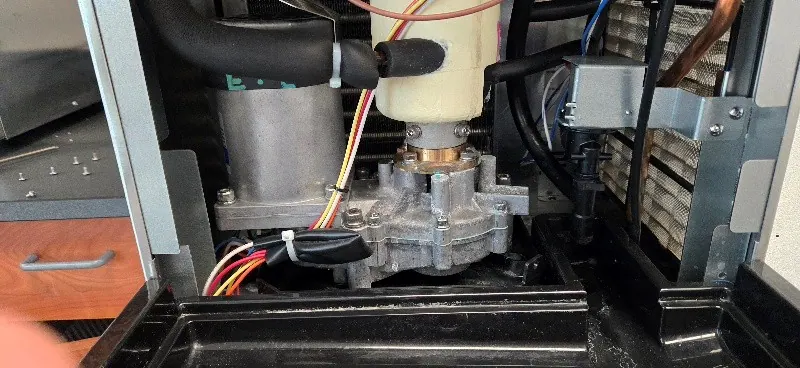 View larger photo
Ice dispenser auger with the cover off at a clinic, Pensacola, FL 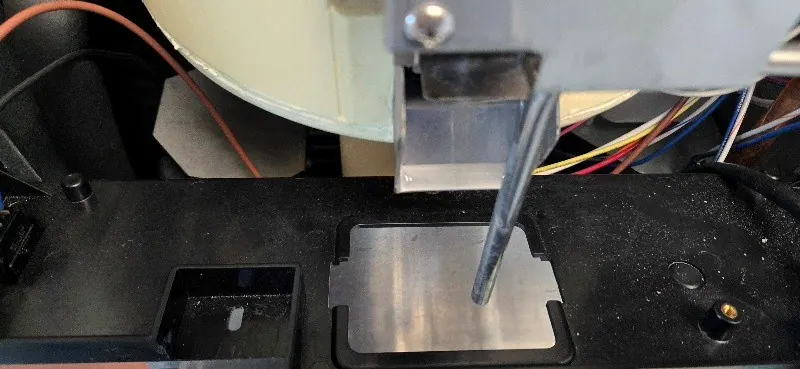 View larger photo
Ice dispenser mechanism, Pensacola, FL 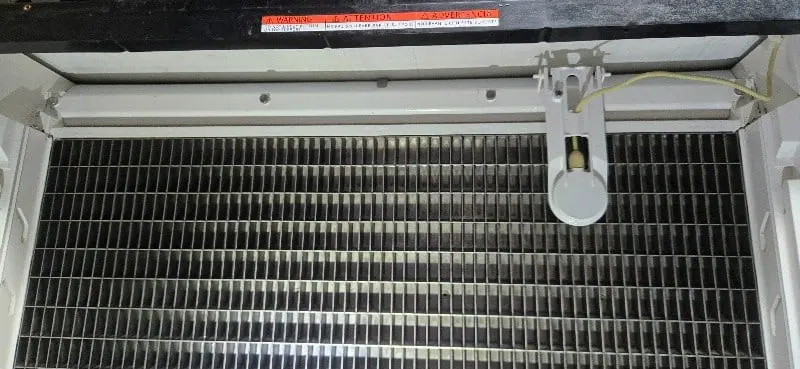 View larger photo
Ice machine evaporator grid with ice thickness probe mounted at top 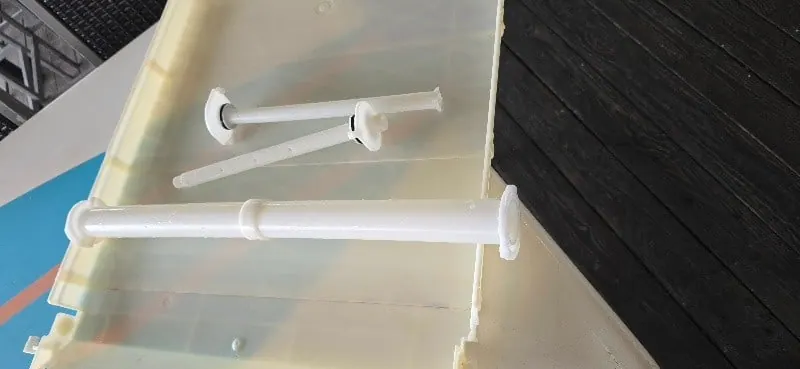 View larger photo
Cleaned ice machine water distribution tubes laid on a plastic panel, Gulf Shores, AL
Infection prevention questions about ice machines
How often should hospital ice machines be cleaned and disinfected?
What disinfectant should be used on a hospital ice machine?
Should patient ice ever be sterile?
Can H2O Technologies service ice machines in healthcare facilities?
Sources
Schedule an ice machine site review
Tell us how many machines you have and where they are. We will call you back to plan a walk-through and a written cleaning schedule.
Call (850) 391-0460