
Guide: Legionella and water management
Do Ice Machines Belong in Your Water Management Program?
Surveyors are coming, and they will ask about your water management plan for Legionella. If your nursing home, hospital or critical access hospital has ice machines with water filters, here is how they fit into that plan and which records to have ready.
- Where ice machines fit in the plan
- What the CMS memo covers
- Why filters count as a risk point
- A maintenance log surveyors can read
The short answer
Yes. The CMS memo on Legionella lists ice machines and water filters among building water system devices where Legionella can grow and spread. Hospitals, critical access hospitals and nursing homes should include them in the risk assessment and water management program, with a dated maintenance log for each machine and filter.
Water management programs tend to focus on the big systems: cooling towers, hot water heaters, decorative fountains and plumbing dead legs. Ice machines are smaller, spread across the building and often maintained by a different vendor, so they can fall outside the plan.
This guide quotes the original CMS memo S&C 17-30, posted June 2, 2017. CMS revised the memo as QSO-17-30 on July 16, 2018, and the original is marked expired. Read the current revision with your water management team before you rely on any wording here. This guide is not legal or compliance advice. Your facility's water management team owns the plan.
Do ice machines belong in a facility water management program?
Ice machines belong in a facility water management program. The CMS memo on Legionella lists ice machines and water filters among the building water system devices where Legionella can grow and spread. A plan that maps hot water, cooling towers and fountains but leaves out ice machines has a known gap.
Including them does not mean treating every ice machine as a high-risk device. It means each machine appears in the risk assessment, has a control measure, and has someone responsible for checking it.
A simple way to add them to the plan:
- Inventory: list every ice machine and ice dispenser, with unit, room and serial number.
- Risk factors: note warm locations, low-use machines where water sits, and machines near patients at higher risk.
- Control measures: cleaning and disinfection on the manufacturer's schedule, and filter changes on a set interval.
- Monitoring: visual checks for scale, slime and leaks at each visit, logged.
- Corrective action: what happens when a check fails, and who is called.
The memo also notes that Legionella is less commonly spread by drinking water or ice. Say so in your plan. The point is to control a known growth site, not to overstate the risk.
What does CMS expect from hospitals and nursing homes on Legionella?
CMS expects hospitals, critical access hospitals and long-term care facilities to have a Legionella risk assessment and a water management program. The original 2017 memo says surveyors will verify both, and that the program should consider the ASHRAE 188 standard and the CDC water management toolkit. CMS revised the memo in July 2018.
The original memo, S&C 17-30, applied to hospitals, critical access hospitals and nursing homes. It described what surveyors would look for:
| Surveyors look for | What that means for ice machines |
|---|---|
| A facility risk assessment | Ice machines and their filters appear as devices in the building water system |
| A water management program | Each machine has a control measure and an owner |
| Use of ASHRAE 188 and the CDC toolkit | The program follows a recognized framework, not an informal habit |
| Documentation | Dated records that show the control measures were carried out |
The revised QSO-17-30 from July 16, 2018 is the current document. Confirm its wording with your water management team and your accrediting body.
Do the water filters on ice machines count as a risk point?
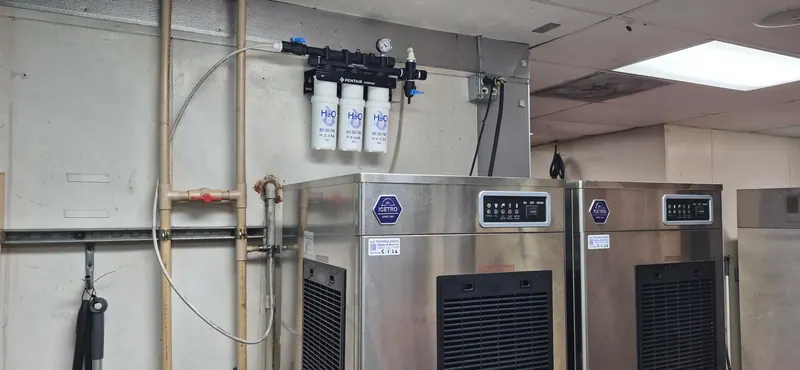
Water filters on ice machines count as a risk point in the original CMS Legionella memo, which lists water filters alongside ice machines among devices where Legionella can grow. A filter cartridge that stays in service too long holds sediment and stays wet, so the plan needs a change interval and a dated label on each housing.
Filters protect the ice machine from sediment and scale, and that is why facilities install them. The tradeoff is that an overdue cartridge becomes part of the problem.
What to put in the plan for each filter:
- Cartridge type and the system it serves.
- Change interval, by rated gallons or months, whichever comes first.
- Install date and next change date, written on the housing and in the log.
- Flushing steps after each change, from the filter maker's label.
- Low-use risk. Filters on machines that sit idle, such as in a closed wing, need attention before the machine returns to service.
Planned water disruptions matter too. The CDC's healthcare recommendations call for disconnecting ice machines before planned water disruptions, and the restart should include the filter.
What ice machine maintenance records should we keep for surveyors?
Ice machine maintenance records for surveyors should include an inventory of every machine and filter, the cleaning and disinfection schedule, dated visit entries with the work done and products used, filter change dates, any problems found with the corrective action taken, and who did each task. Keep them with the water management program.
A record that a surveyor can read in a minute is worth more than a thick binder nobody can follow. Use the same format for every machine:
| Field | Example entry |
|---|---|
| Machine | Unit 3 nourishment room, serial number |
| Task | Clean and disinfect per manufacturer procedure |
| Products | Cleaner name, EPA-registered disinfectant name |
| Filter | Cartridge type, changed, next change date |
| Findings | Light scale on evaporator, cleaned |
| Corrective action | None needed, or what was done |
| Done by | Technician name and company |
| Date | Visit date |
Ask your service vendor to leave a record in this format at every visit, or to send it to the person who keeps the water management binder. If the ice machines are not in the plan yet, a written maintenance log format is the first thing to set up.
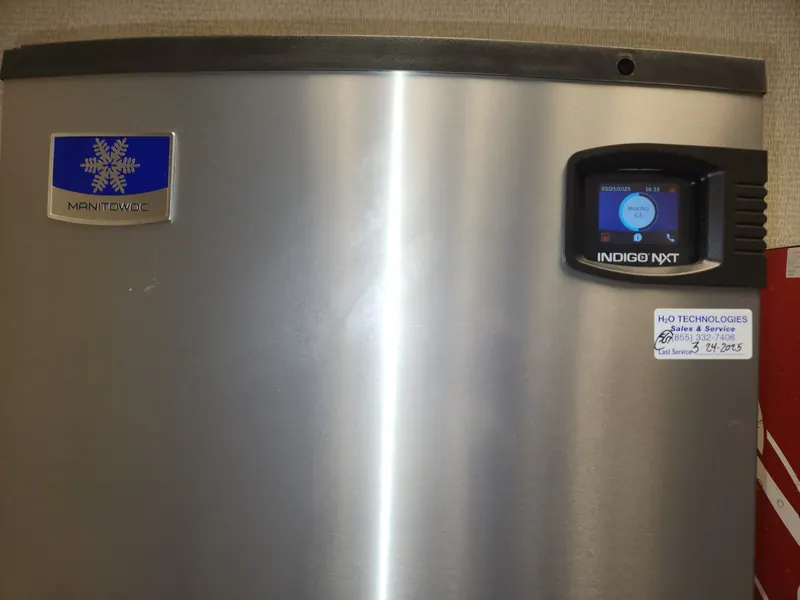
Dated filter labels and documented service
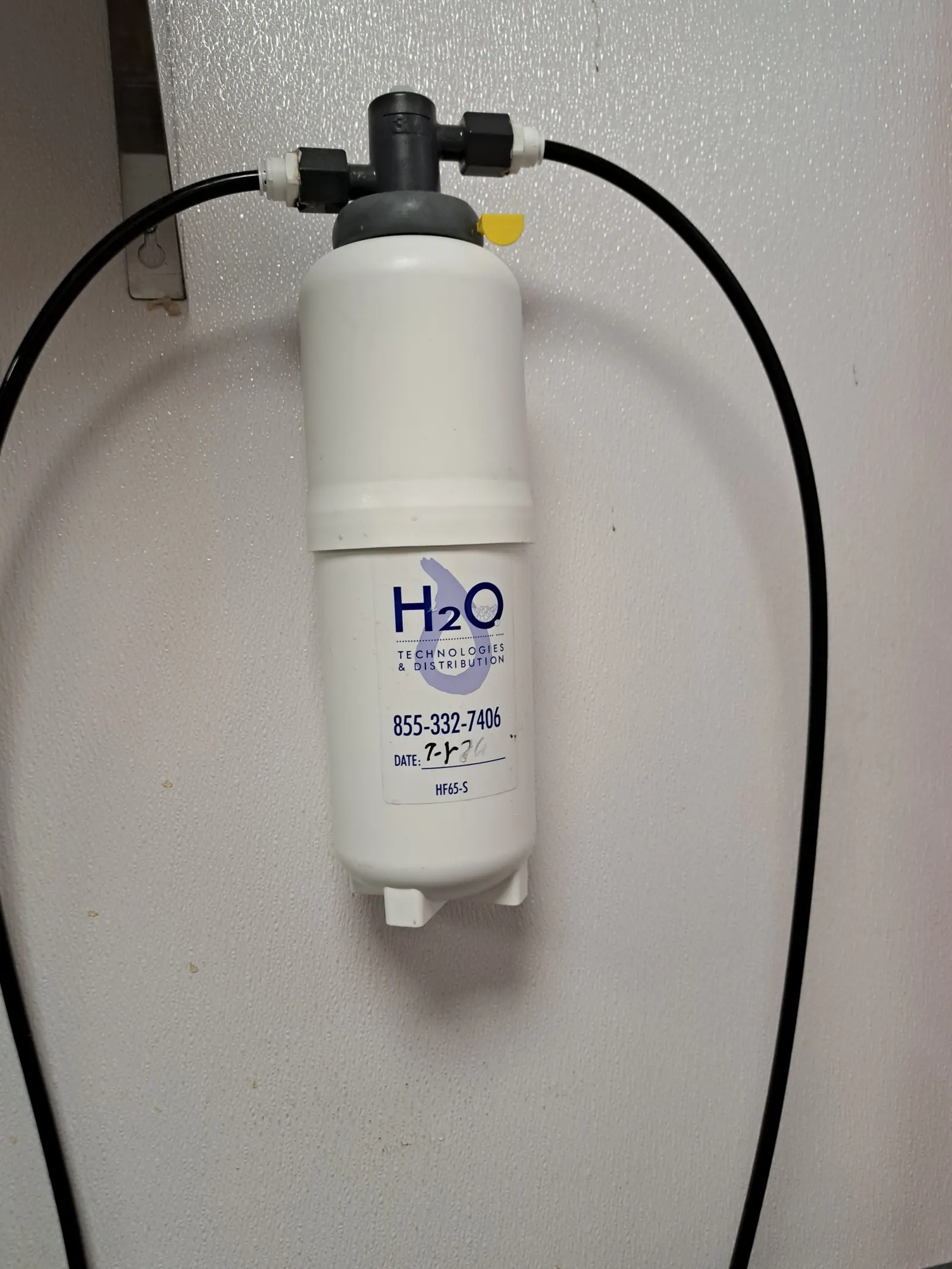
Service labels on filter housings let anyone confirm the last change date without opening the log.
 View larger photo
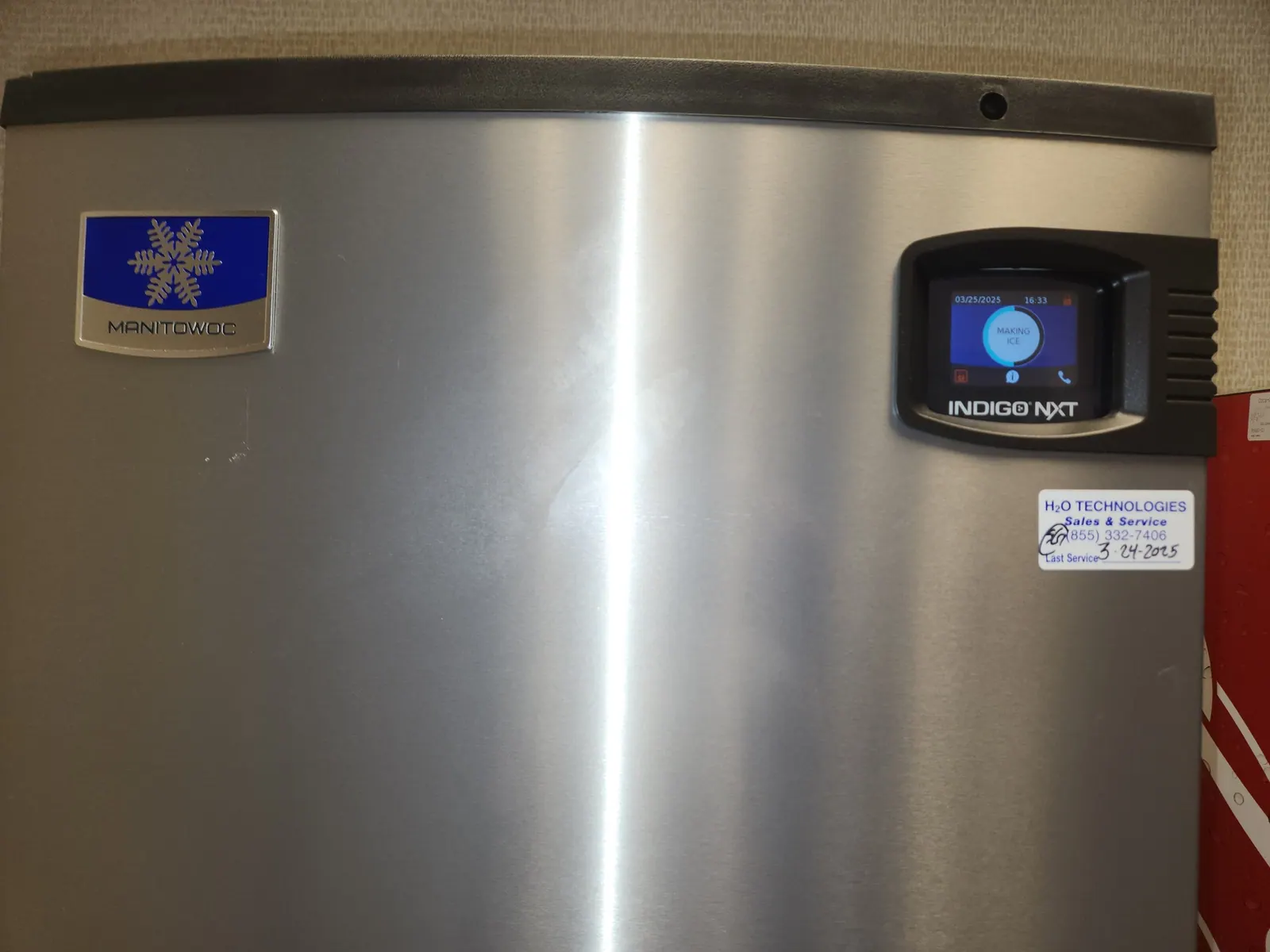
Manitowoc ice machine front with an H2O Technologies service sticker, Orange Beach, AL 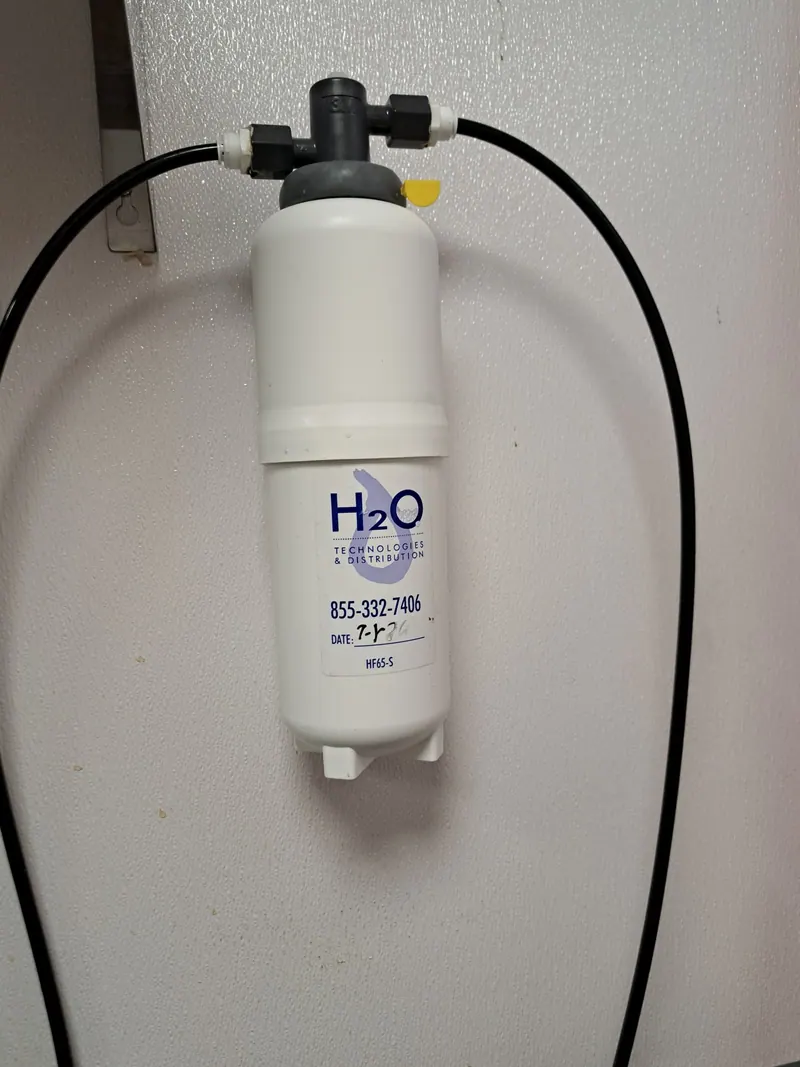 View larger photo
Wall-mounted water filter with an H2O Technologies label, Charlotte, NC 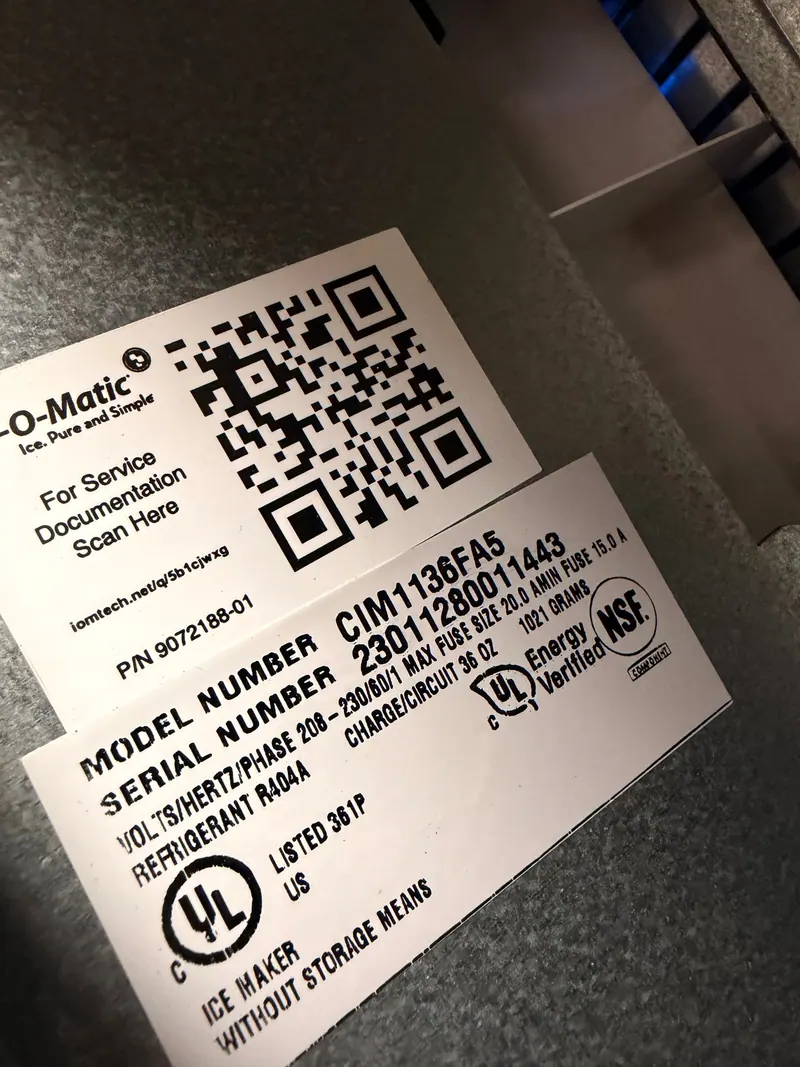 View larger photo
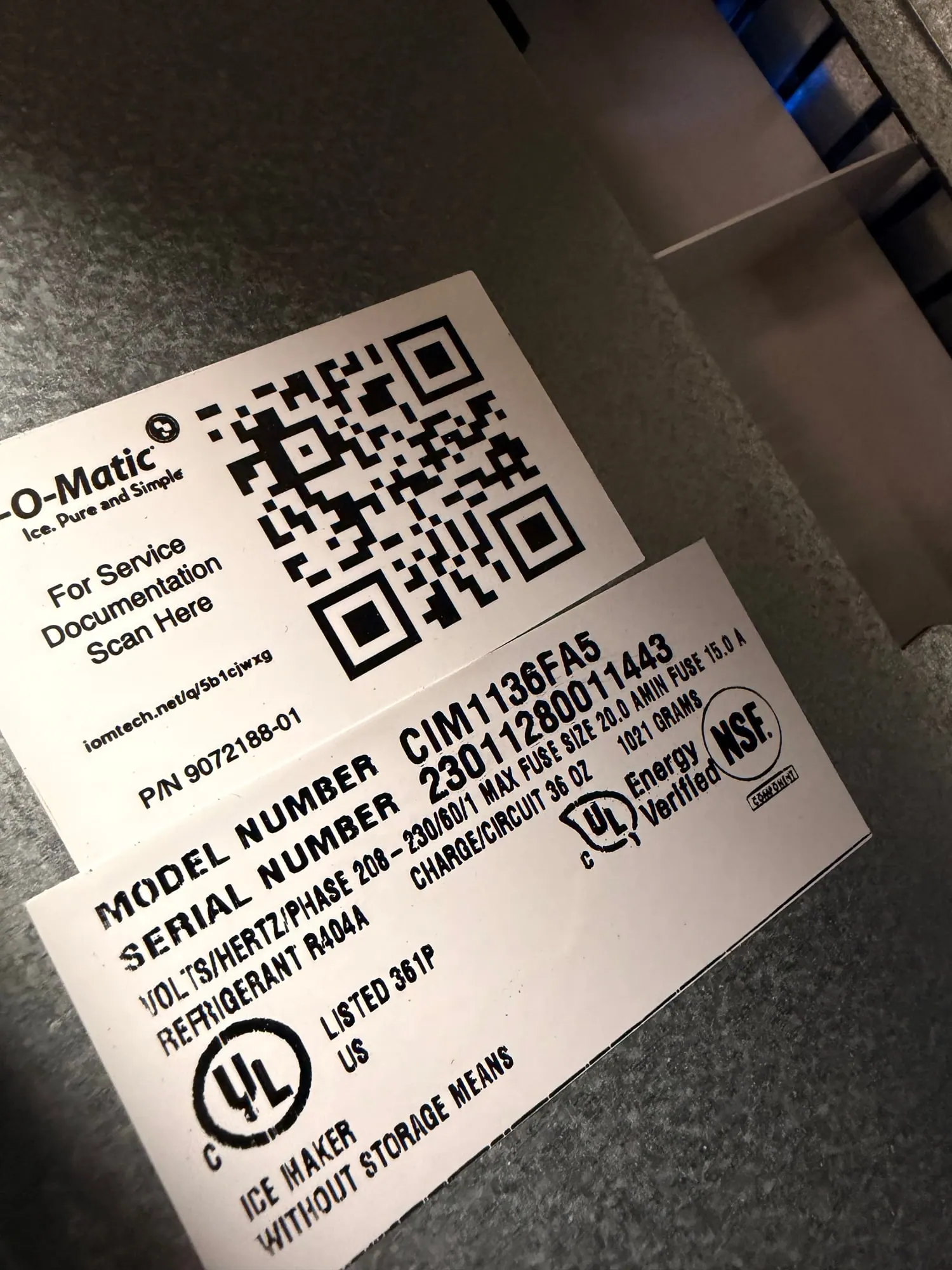
Ice maker data plate for model CIM1136FA5 with R404A refrigerant 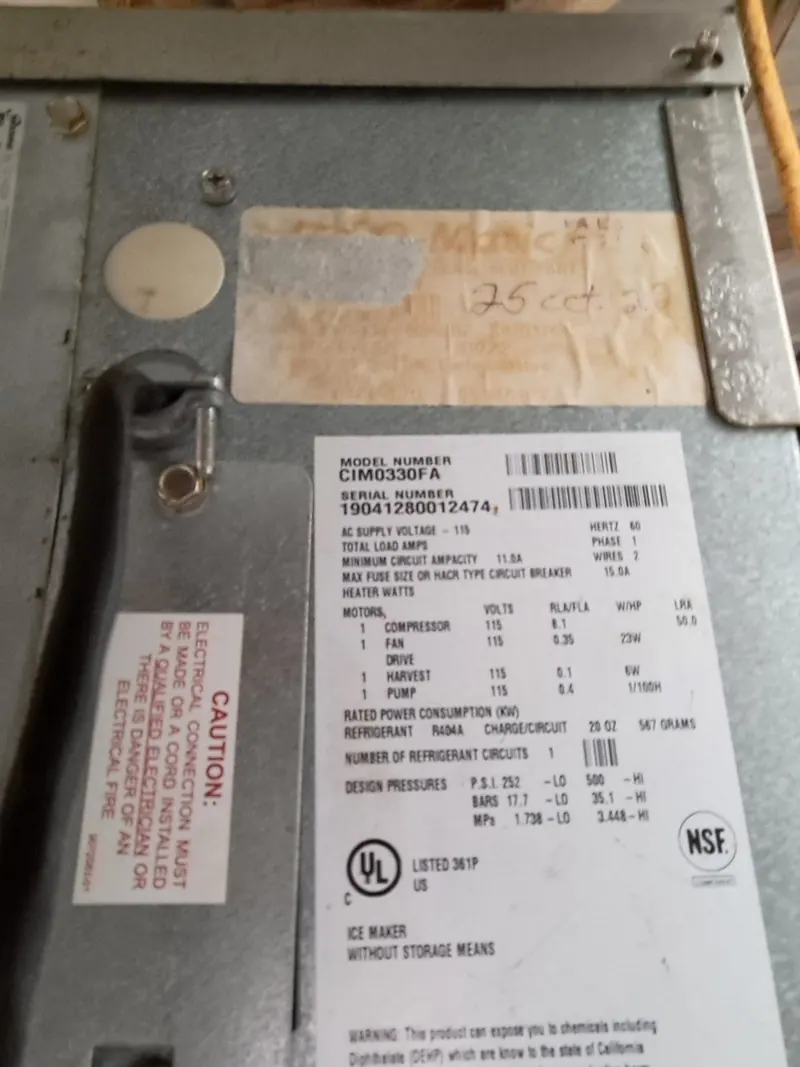 View larger photo
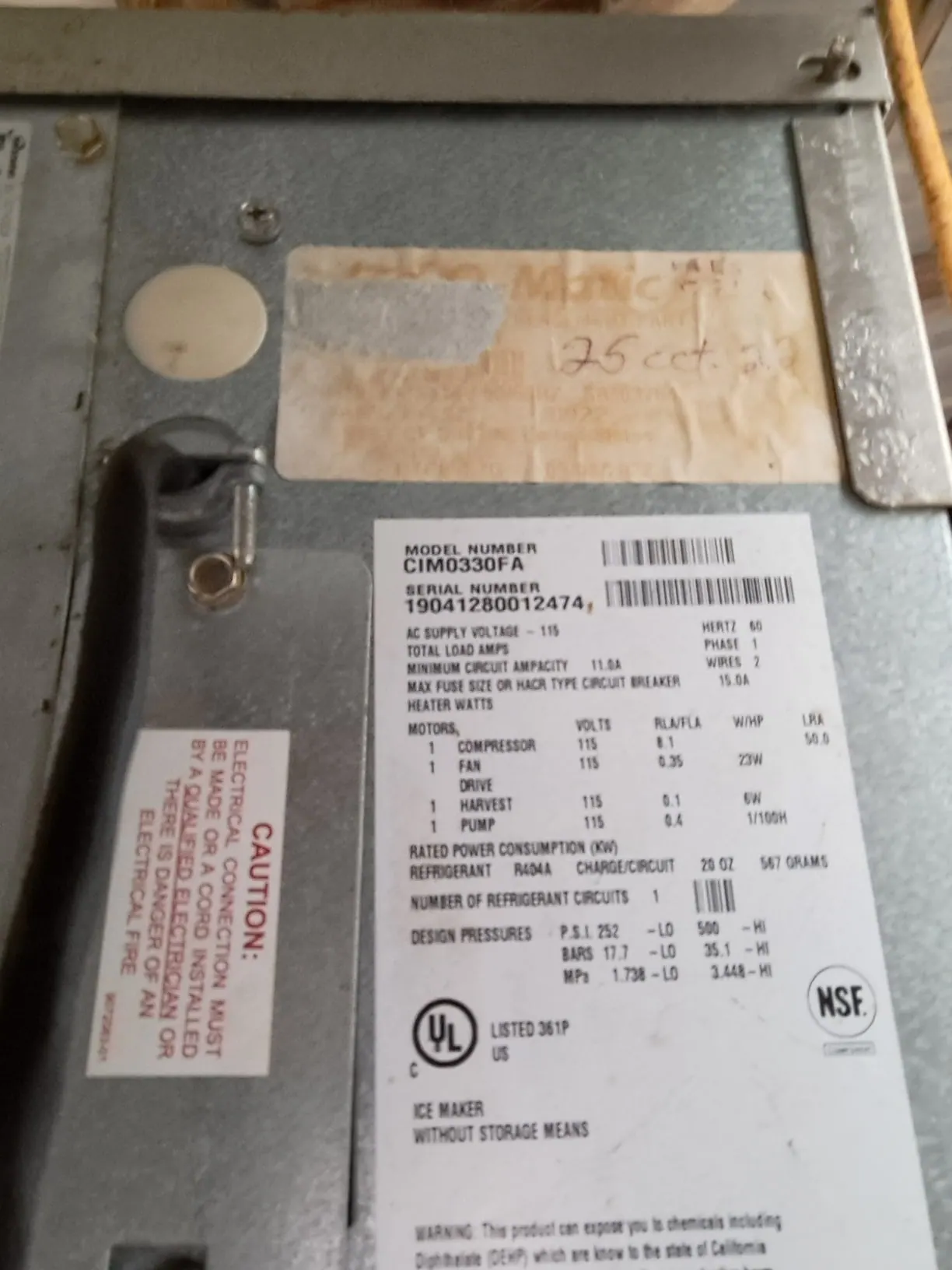
Data plate for model CIM0330FA with R404A refrigerant and NSF and UL marks
Water management questions from long-term care teams
Do we need to test ice machines for Legionella?
Is ice a common way Legionella spreads?
Who should own the ice machines in the plan?
Can H2O Technologies help with maintenance records for our plan?
Schedule a call about ice machine service records
Tell us how many machines and filters your facility has. We will call you back to plan a schedule and a record format.
Call (850) 391-0460