
Guide: ice machine sanitation
Ice Machine Written Up for Mold or Slime? What to Do Next
The inspector found mold or slime inside your ice machine. You wiped it down, and the pink and black growth near the chute came back. This guide explains why it happens, what to fix before the reinspection, and how to stop it from returning.
- Where slime hides inside the machine
- Cleaning versus sanitizing
- A checklist for the reinspection
- Why growth keeps coming back
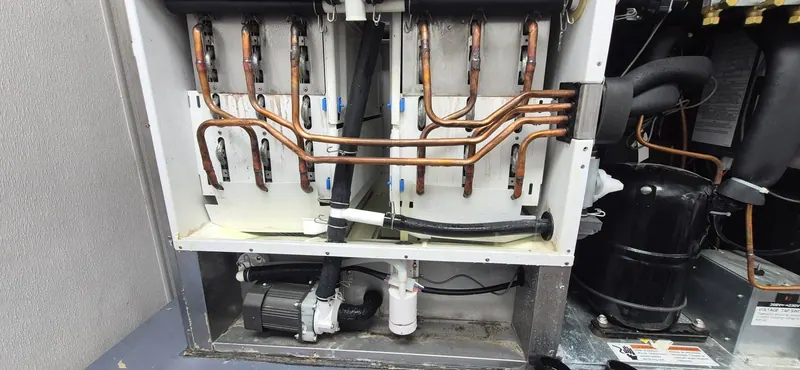
The short answer
An ice machine fails inspection for mold or slime because the inside of the machine is a food contact surface, and growth there means it is not clean to sight and touch. Wiping the bin is not enough. Clean and sanitize the full water and ice path to the manufacturer's procedure, then keep a schedule.
A write-up for mold or slime in the ice machine is a common finding in restaurant and bar inspections, and a frustrating one. The bin looks clean. Staff wipe it every night. Then the inspector pulls a panel or shines a light up the chute, and the growth is right there.
This guide is for the manager who has to fix it before the reinspection and keep it fixed after. It covers general cleaning and prevention only. Your local health department's written findings and your machine maker's cleaning procedure govern the actual fix, so keep both in front of you. Nothing here is a promise that you will pass the reinspection.
Why does an ice machine fail a health inspection for mold or slime?
Health inspectors treat the inside of an ice machine as a food contact surface, so visible mold or slime is a cleanliness violation. One Pennsylvania report in July 2024 recorded an ice machine interior with mold that was not clean to sight and touch. Houston's chief sanitarian has called slime a critical violation.
Ice is food. Anything that touches ice before it reaches a glass, from the evaporator where it freezes to the chute it slides down and the bin it sits in, is held to the same standard as a cutting board.
The Houston example shows how common the finding is. In a November 2017 KPRC report, the city's chief sanitarian said inspectors found slime in ice machines about 50 to 100 times a month, and that a machine can be taken out of service until it is cleaned.
The write-up is rarely about the ice you can see. It is about the parts behind the front panel that get wet on every freeze cycle and never get wiped.
| What the inspector finds | What it usually means | What to fix |
|---|---|---|
| Pink or black film near the chute or deflector | Moist surfaces that daily wiping does not reach | Full clean and sanitize with panels removed |
| Dark spots on the bin walls or door gasket | Bin cleaned less often than the machine needs | Empty, clean and sanitize the bin and gasket |
| Slime on the water curtain or splash panel | Food zone parts not removed during cleaning | Remove, soak, scrub and sanitize those parts |
| Growth back within weeks of a cleaning | Schedule too long for the location, or a missed zone | Shorter interval and a written checklist |
Where does slime grow inside a commercial ice machine?
Slime grows where water sits, splashes or condenses inside the machine: the water trough, the distributor or spray tubes, the water curtain or splash panel, the evaporator, the ice chute, the bin walls and the door gasket. Growth near the chute is common because that area stays damp and is hard to reach without removing panels.
Most commercial cube machines share the same food zone, even when the parts have different names from one brand to the next. Walk through it with the manual open:
- Water trough or sump. Water sits here between cycles. Look for film along the waterline.
- Distributor or spray tubes. These spread water over the evaporator. Small holes clog with scale and film.
- Water curtain or splash panel. It hangs in front of the evaporator and gets wet every cycle. Slime often shows up on the back side first.
- Evaporator. The grid where ice forms. Scale and film here also slow production.
- Chute and ice deflector. Damp, dark and easy to miss.
- Bin walls, baffle and door gasket. The gasket folds trap moisture.
- Scoop and scoop holder. A scoop stored in the ice or in a dirty holder carries growth back into the bin.
The condenser and air filters are not food zones, but a clogged condenser makes the machine run longer and hotter. Clean them on the same visit.
How often should a commercial ice machine be cleaned and sanitized?
A Manitowoc service manual says to clean and sanitize the ice machine every six months, and to have the water tested if the machine needs cleaning more often than that. Treat six months as the longest gap, not the target. Your model's manual and your local health department's findings set the actual schedule.
Cleaning and sanitizing are two different steps, and both matter:
- Cleaning removes scale and film. It uses the ice machine cleaner your manufacturer names, run through the machine and used to scrub removable parts.
- Sanitizing kills what is left on the clean surface. It uses a sanitizer approved for your machine, mixed only as the label says.
Skipping the sanitizing step is one of the reasons growth comes back. So is cleaning only the parts you can see.
If your machine is getting written up between cleanings, the interval is too long for that location. Hot back rooms, machines near prep areas and high-volume bars often need a shorter cycle than the six-month floor. Your manual's procedure, not a general rule, decides which chemicals and how long they stay in contact.
Our Water Filtration and Ice Machine Maintenance plan is $50.00 per month per location. Call (850) 391-0460 to confirm what the plan covers for your machine and how often visits happen.
What should we do before the health inspector comes back?
Before the reinspection, read the written finding, throw out the ice in the bin, clean and sanitize every food contact part to the manufacturer's procedure, replace a water filter that is past its date, and write down what was done and when. The goal is a machine that is clean to sight and touch.
Use this checklist in order:
- Read the report. Note exactly which part was cited and whether the inspector set conditions for using the ice before reinspection.
- Stop and empty. Turn the machine off as the manual directs, discard the ice and keep it off until the work is done.
- Remove the food zone parts your manual lists as removable: curtain, distributor, trough, deflector.
- Clean, then sanitize. Run the machine's cleaning cycle, scrub removable parts, then sanitize parts and interior surfaces with the products the manual names.
- Do the bin. Clean and sanitize the bin walls, baffle, door and gasket, plus the scoop and its holder.
- Check the filter. If the cartridge is past its date or its rated gallons, replace it and write the date on the housing.
- Restart and discard. Follow the manual's restart steps and throw out the first batch if it directs you to.
- Write it down. Date, who did the work, what was cleaned, which products were used. Keep the log near the machine.
If the growth is deep in parts you cannot reach without tools, or the machine keeps failing, book a professional clean and sanitize before the reinspection date.
Why does the slime keep coming back after we clean it?
Slime comes back when cleaning only reaches the surfaces you can see, when parts are wiped but not sanitized, or when the schedule is too long for the location. Growth left behind panels, in the distributor or inside the chute reseeds the clean areas. The full procedure in the manual reaches those parts.
Other common reasons growth returns:
- The scoop lives in the ice. Store it outside the bin in a clean holder.
- The bin door stays open. Warm, damp air moves in and condenses on the walls.
- The water filter is overdue. A loaded cartridge passes more sediment, and sediment gives film something to cling to. A filter does not stop slime on its own, but an overdue one makes the job harder.
- The water needs testing. The same Manitowoc manual says to have the water tested if the machine needs cleaning more often than every six months.
- Nobody owns the job. A written schedule with a name on it keeps the cleaning from slipping during busy weeks.
If you have cleaned thoroughly and the growth is back within a few weeks, the machine or its location needs a closer look from a service technician.
What a full clean and sanitize looks like
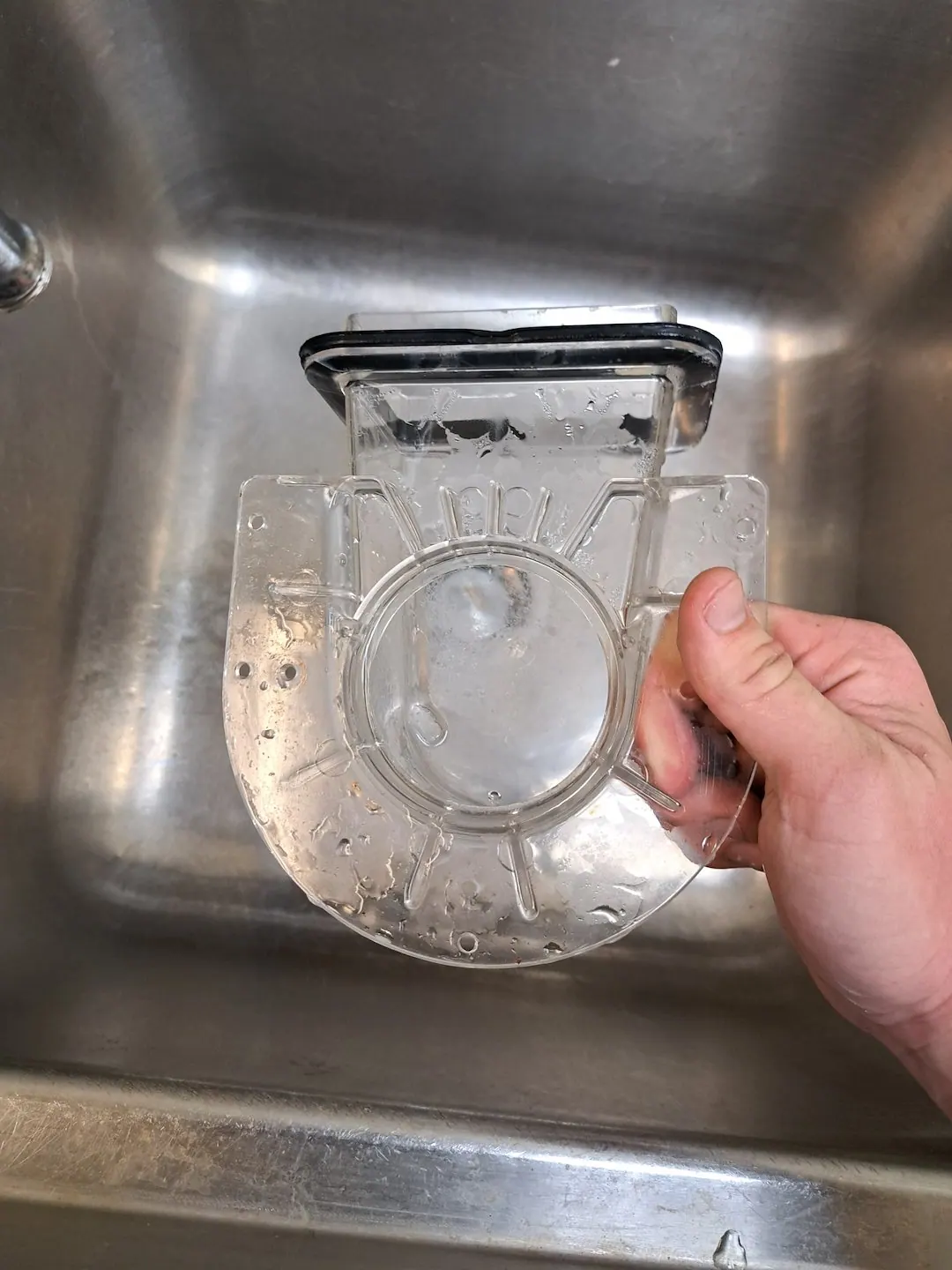
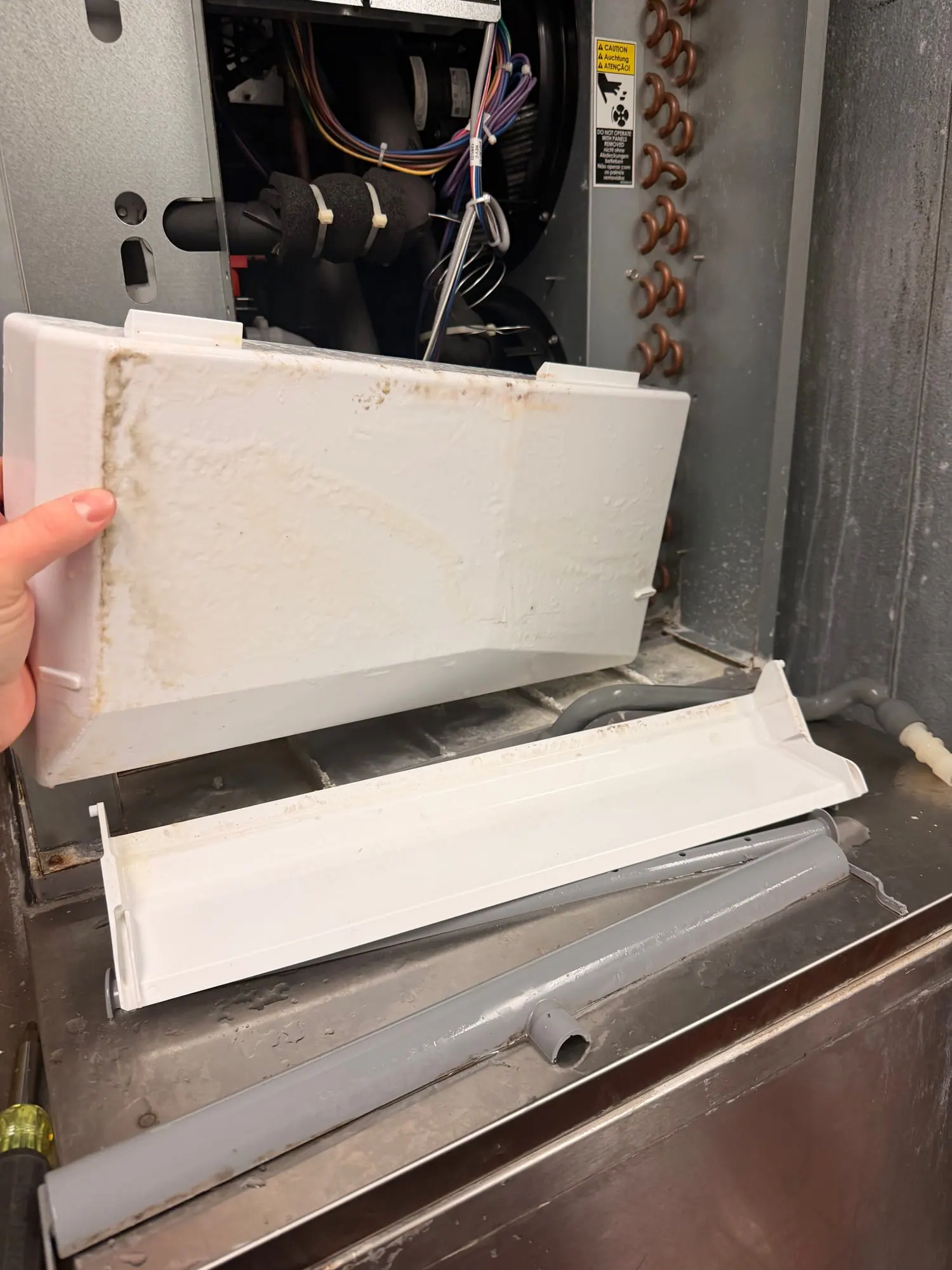
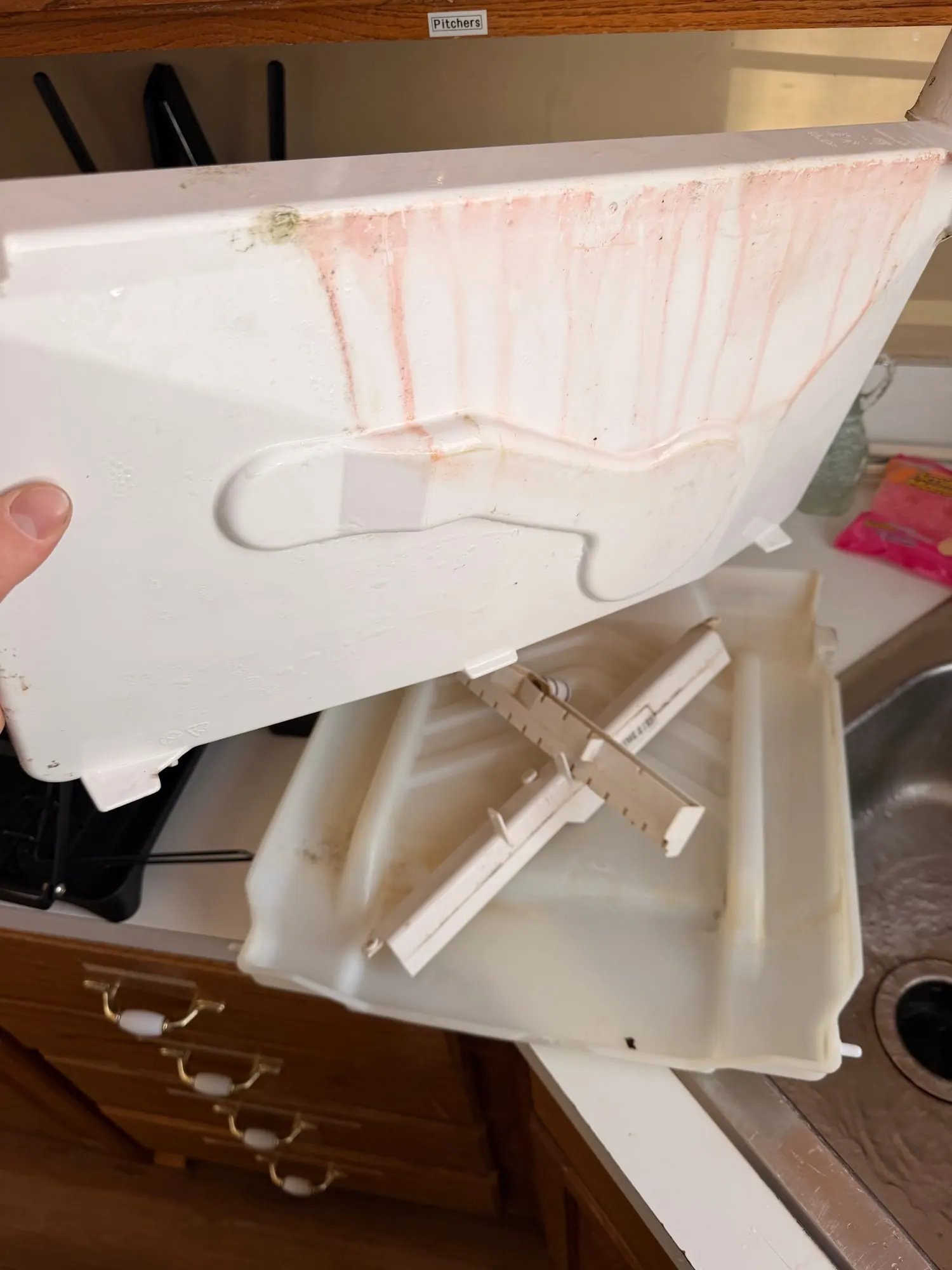
Photos from our preventive maintenance visits. Food zone parts come out of the machine so every surface gets cleaned and sanitized.
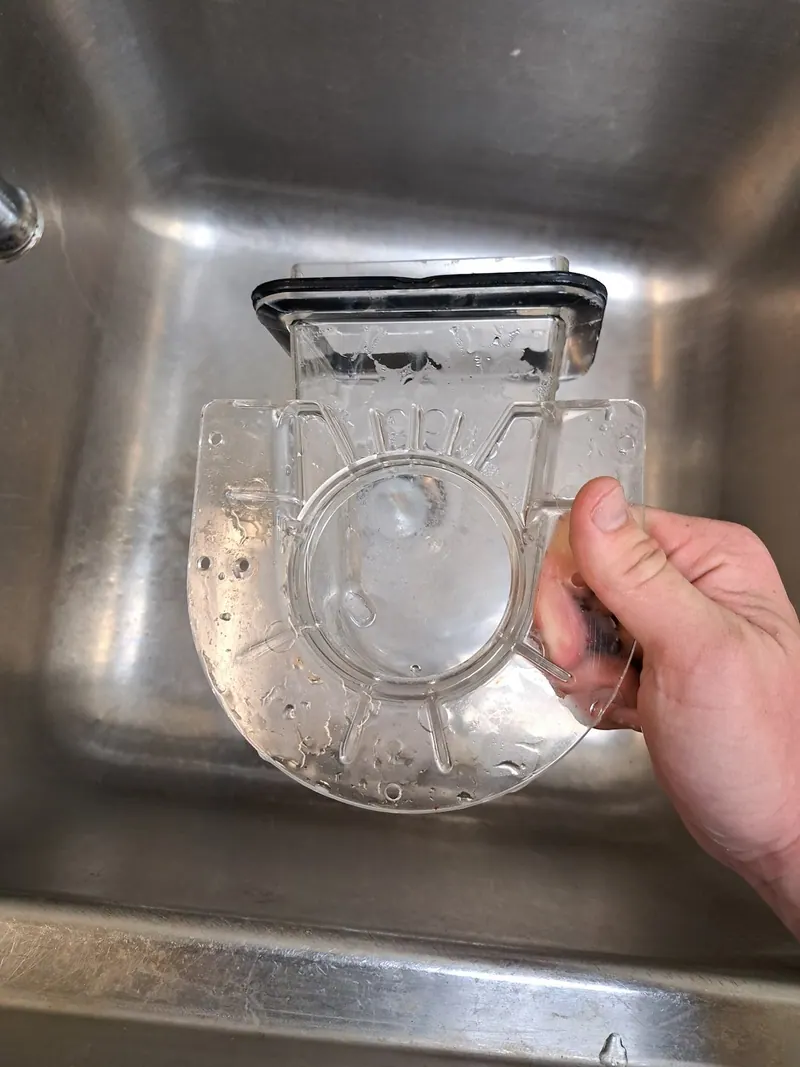 View larger photo
Water distribution part being cleaned, Birmingham, AL 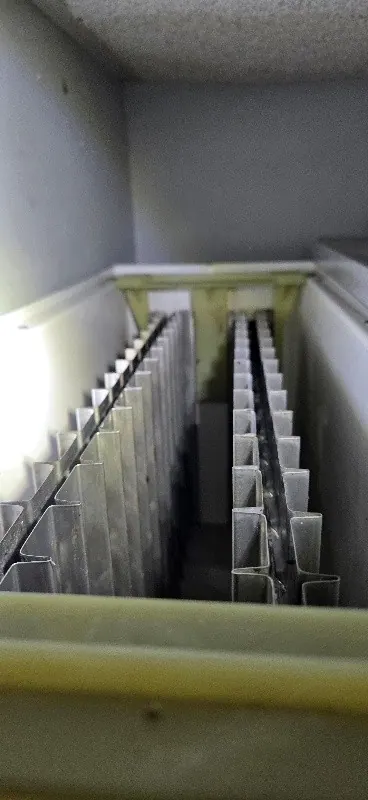 View larger photo
Evaporator plates after cleaning, College Station, TX 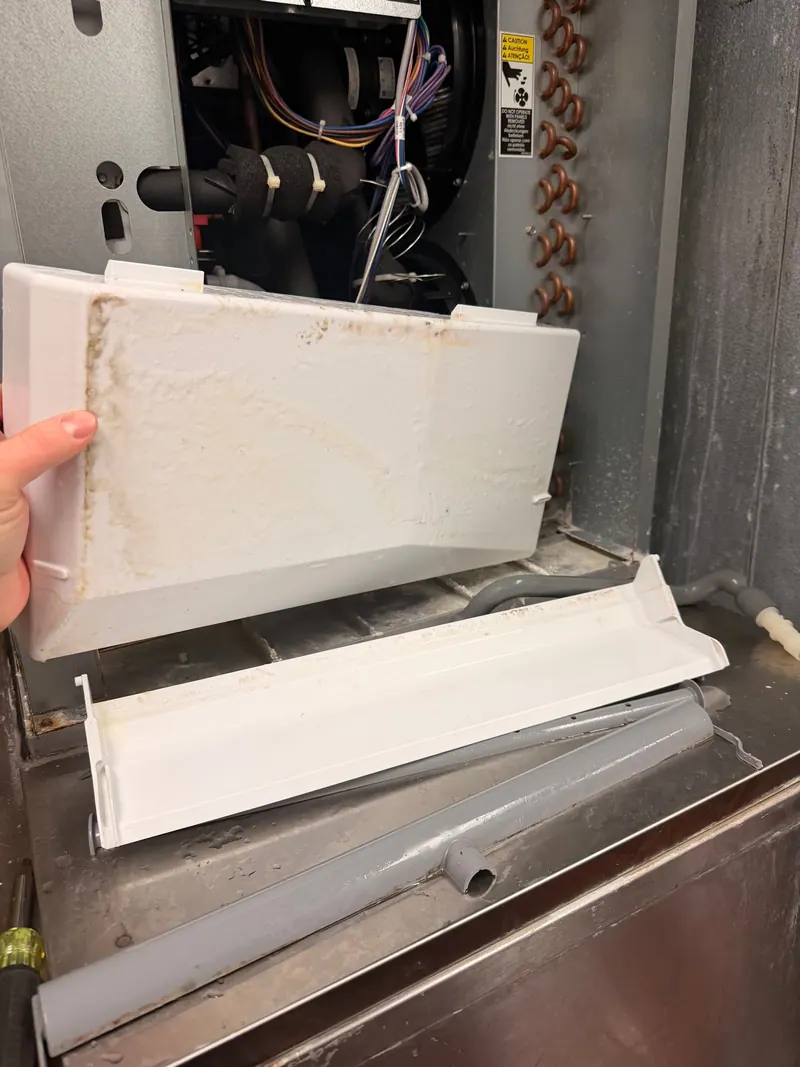 View larger photo
Stained plastic parts and water tube with buildup removed from an ice 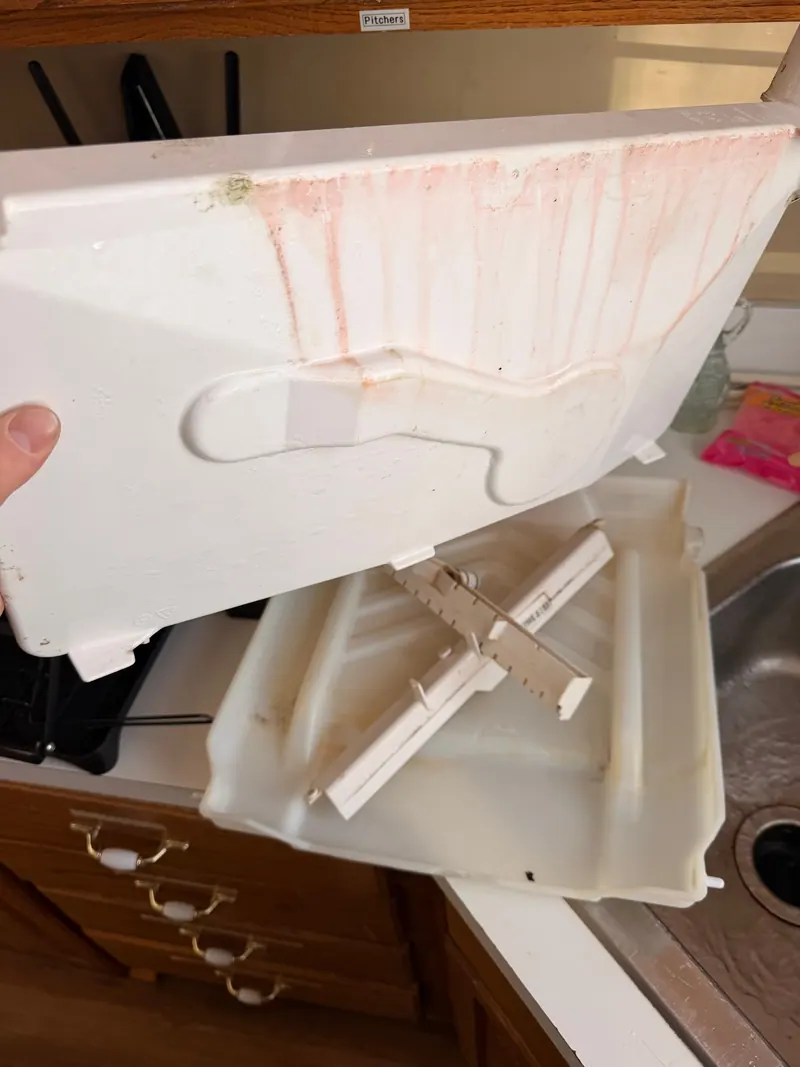 View larger photo
Ice machine part with pink slime stains, held over the water trough
Questions managers ask after a mold or slime write-up
Can we keep using the ice machine after a mold violation?
Does a water filter stop slime in an ice machine?
Can we use any cleaner or bleach on the ice machine?
How much does professional ice machine cleaning cost?
Who should keep the cleaning log?
Schedule an ice machine clean and sanitize
Tell us your machine type and your reinspection date. We will call you back to set up a visit.
Call (850) 391-0460