
Guide: summer ice production
Why Your Ice Machine Makes Less Ice in the Summer
Every summer the ice machine falls behind. It runs all day, the bin is half empty by lunch, and the machine sits next to the fryers. Before you buy a new one, find out whether it is broken or just losing a fight with the heat.
- Air and water temperature
- Airflow and placement
- Scale and clogged filters
- When it is a repair
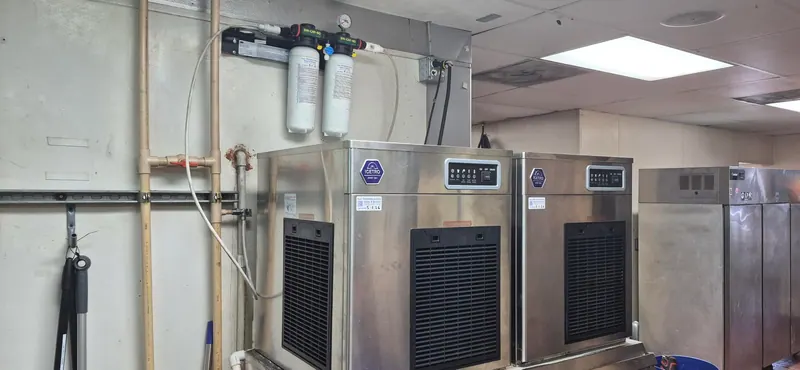
The short answer
An ice machine makes less ice in summer mainly because the air around it and the water coming in are warmer, which Scotsman names as the most common factors in production. Blocked airflow, a dirty condenser, scale and a clogged filter make it worse. Fix placement and cleaning first, then call for service.
A machine that keeps up in March and falls behind in July is telling you something about its surroundings as much as about itself. The good news is that several causes are cheap to fix.
This guide is a diagnostic orientation, not a repair manual. It does not cover refrigerant or electrical work, which belong to a qualified technician.
Why does my ice machine make less ice in the summer?
An ice machine makes less ice in summer because warmer room air and warmer incoming water slow the freeze cycle. Scotsman names ambient air temperature and incoming water temperature as the most common factors affecting ice production. A machine rated at mild conditions can fall well short in a hot kitchen or a warm storage room.
Ice machine ratings come from test conditions. Scotsman says 24-hour production is typically published at 90°F air and 70°F water, or at 70°F air and 50°F water. On a hot day in a closed back room, your machine may be working in air warmer than either one, with warm water from a line that runs through a hot ceiling.
Summer also raises demand at the same moment. More iced drinks, more guests and longer busy periods mean the machine has to make more ice while it is able to make less.
What you can do right away:
- Keep doors and vents to the machine room open if the room has no cooling.
- Move heat sources away where you can, or move the machine.
- Check where the water line runs. A line through a hot attic or along a wall behind cooking equipment delivers warmer water.
Does a hot kitchen or poor airflow slow down an ice machine?
A hot kitchen or poor airflow slows an ice machine down. Scotsman says actual production can differ from published values because of breathability on air-cooled machines, meaning the machine can only reject heat as well as the air around it allows. A machine boxed in beside fryers or against a wall recirculates its own hot exhaust air.
Air-cooled machines pull room air across the condenser to carry heat away. When that air is hot, or when the machine breathes its own exhaust, production drops.
Check the basics:
- Clearance. Look up the clearance your model needs on each side and the top, and measure it.
- Exhaust path. Make sure hot air leaving the machine is not blowing straight back into the intake.
- Neighbors. Fryers, ovens, dish machines and compressors from other equipment add heat right where the machine breathes.
- Air filters and condenser. A dusty air filter or a clogged condenser coil blocks airflow even in a cool room.
If the location cannot change, ask about options such as a remote condenser or a different machine style when it is time to replace it.
Can scale or a clogged water filter reduce ice production?
Scale and a clogged water filter can reduce ice production. Scotsman says water quality affects ice production. Scale on the evaporator acts like insulation between the cold metal and the water, so each cycle takes longer. A loaded filter cartridge can also restrict water flow, which can make cubes small, hollow or slow to form.
Both problems build up slowly, so they often show up first in summer, when the machine has no extra capacity to hide them.
Signs to look for:
- White or chalky crust on the evaporator, distributor or water trough.
- Thin, cloudy or partial cubes, or a harvest that takes longer than it used to.
- A filter past its date or past its rated gallons.
- Low water flow into the machine during the fill.
A cleaning and descaling to the manufacturer's procedure, plus a new cartridge, often brings production back. If scale returns quickly, the water needs better treatment. See our guide on hard water, scale and ice machine filtration.
When is low ice production a sign the machine needs repair?
Low ice production is a sign the machine needs repair when output stays low after the condenser is cleaned, airflow is clear, the machine is descaled and the filter is new. Other warning signs are long cycles, failed harvests, ice frozen to the evaporator, odd noises, leaks or a machine that keeps shutting off. Age and condition matter too.
At that point, a technician needs to check what you cannot see: refrigeration performance, valves, sensors and controls. Do not attempt refrigerant or electrical work yourself.
Before you call, note:
- How full the bin gets overnight versus by lunch.
- The air temperature near the machine during the afternoon.
- When it was last cleaned and when the filter was last changed.
- Any error lights or messages.
That information shortens the visit. If the machine is old and the fixes keep adding up, compare a repair to a replacement or a lease, and size the new machine to your real summer conditions. Our guide on how much ice your business needs walks through the math.
Condenser and air filter cleaning
Airflow parts get cleaned on preventive maintenance visits because a blocked condenser cuts production in hot weather.
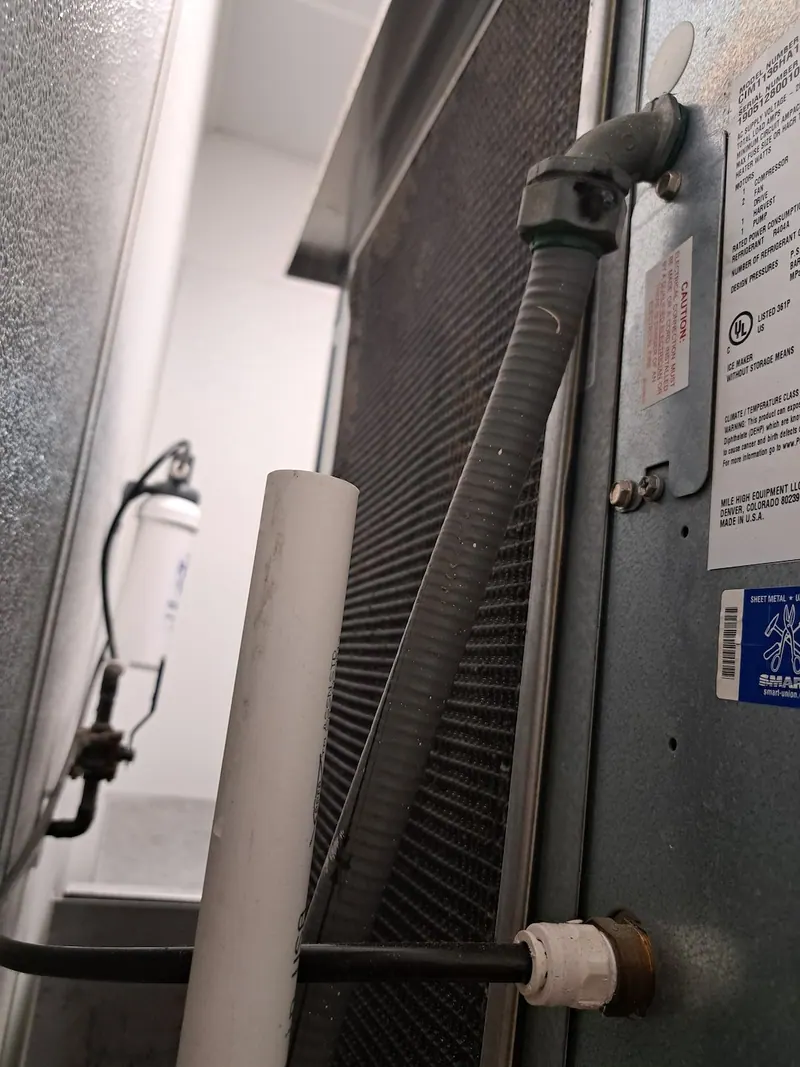 View larger photo
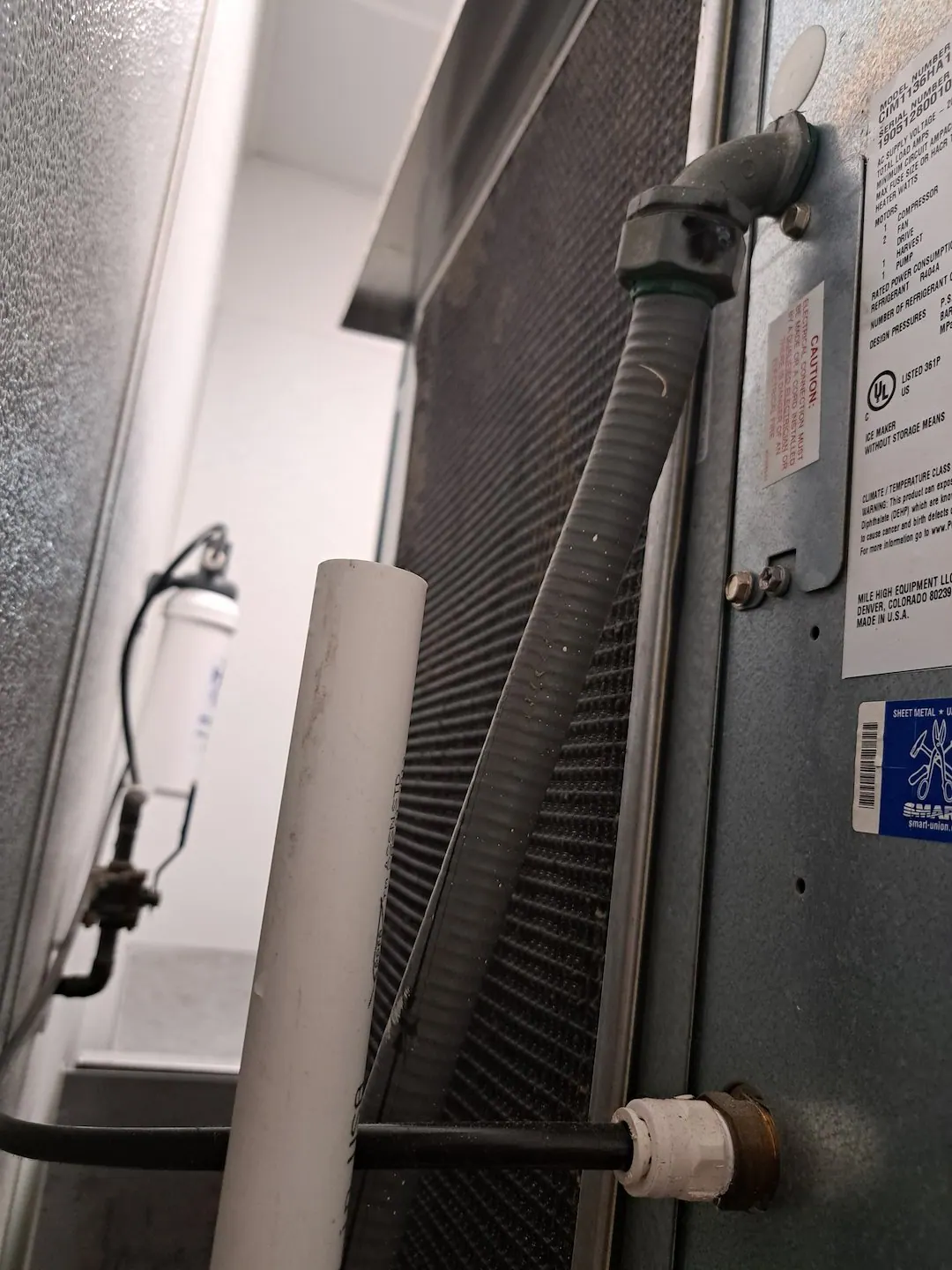
Air condenser and water line, Orlando, FL 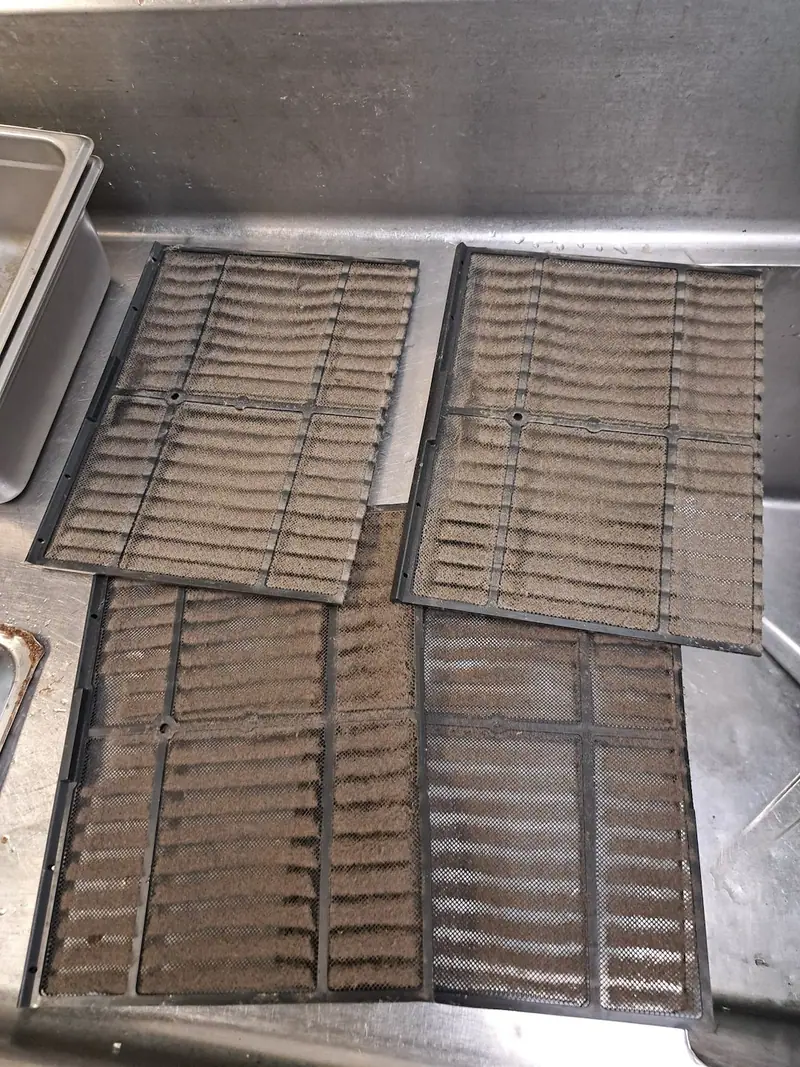 View larger photo
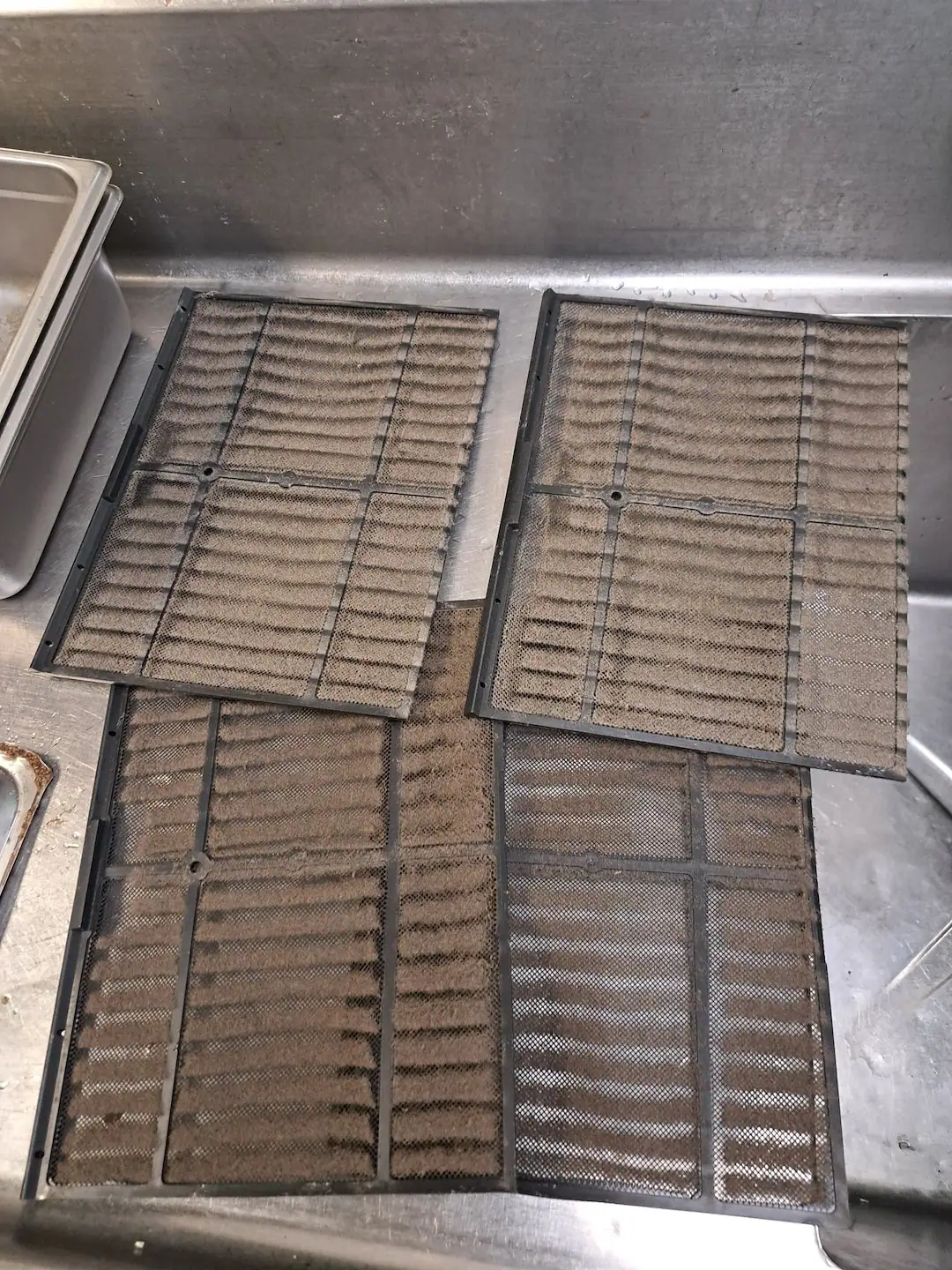
Washed air filters drying, Birmingham, AL 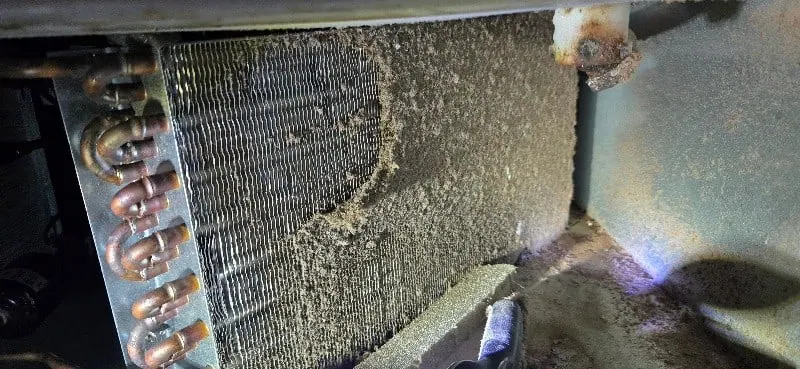 View larger photo
Condenser coil clogged with dust and lint before cleaning 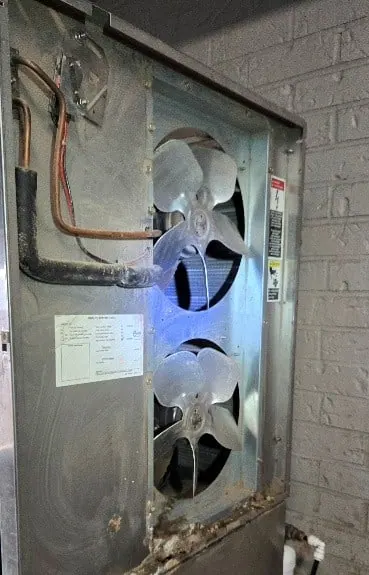 View larger photo
Ice machine with rear panel off showing two condenser fans and copper
Summer ice production questions
Is it normal for an ice machine to slow down in hot weather?
Can I put a fan on my ice machine?
How often should the condenser be cleaned?
Who can check my ice machine before summer?
Schedule a summer production check
Tell us your machine and when it falls behind. We will call you back to set up a cleaning, airflow and production check.
Call (850) 391-0460