
Guide: espresso and coffee water
Water Filtration for Espresso Machines: Softener, Carbon or RO?
You just installed a commercial espresso machine and the installer asked what water filtration you have. Your tap water is hard. Here is what water the machine actually needs, and how to choose between a softener, a carbon filter and reverse osmosis.
- Read your machine maker's water spec
- Why hardness and alkalinity matter
- Softener, carbon or reverse osmosis
- How to test before and after
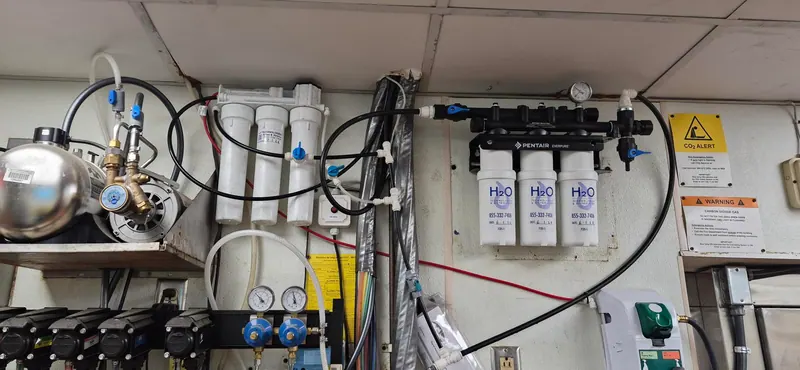
The short answer
A commercial espresso machine needs water inside its maker's published range. La Marzocco's checklist lists 70 to 100 ppm hardness, 90 to 150 ppm total dissolved solids and 40 to 80 ppm alkalinity. Test your water before and after filtration, then choose carbon, a softener or reverse osmosis to land inside that range.
Espresso machines are less forgiving about water than ice machines. The boiler heats the same water again and again, and small changes in minerals show up as scale, corrosion or a change in the cup.
One caution before the numbers: every manufacturer publishes its own water specification, and the figures here come from one maker's 2016 checklist for one model. Use them as an example of what a specification looks like, then get the specification for your own machine. This guide does not interpret any warranty, and it leaves taste and recipes to you.
What water specification does a commercial espresso machine need?
Each commercial espresso machine maker publishes its own water specification. La Marzocco's 2016 preventative maintenance checklist for the Linea PB lists 70 to 100 ppm total hardness, 90 to 150 ppm total dissolved solids, 40 to 80 ppm alkalinity and no more than 0.1 ppm total chlorine. Check the specification for your exact model.
The full La Marzocco list for that model:
| Measure | Linea PB specification |
|---|---|
| Total dissolved solids | 90 to 150 ppm |
| Total hardness | 70 to 100 ppm |
| Alkalinity | 40 to 80 ppm |
| Total chlorine | 0 to 0.1 ppm |
| Free chlorine | 0 to 0.05 ppm |
| pH | 6.5 to 8 |
| Chloride | 0 to 30 ppm |
| Water pressure | 45 to 80 psi |
Notice that the specification has a minimum as well as a maximum for hardness, dissolved solids and alkalinity. More treatment is not always better.
Why is hard water a problem for espresso machines?
Hard water is a problem for espresso machines because the boiler heats water over and over, and heat drives calcium and magnesium out of the water as scale. Scale coats heating elements, narrows small passages and sticks to valves and sensors. Makers also publish a minimum, because water stripped of minerals brings problems of its own.
For comparison, here is how some utility water stacks up against the La Marzocco example. These are utility averages or ranges, not your building's water:
| Utility | What it reports | Against the example spec |
|---|---|---|
| Orlando, FL (OUC) | Average hardness 129 ppm | Above the 70 to 100 ppm hardness range |
| Birmingham, AL (BWWB) | Total hardness 40 to 156 mg/L (2024 data) | Can fall below or above the range |
| College Station, TX | Hardness 6.02 ppm, but total dissolved solids 557 ppm and alkalinity 407 ppm | Soft, yet far above the dissolved solids and alkalinity ranges |
The College Station example shows why hardness is not the whole story. Water can be soft and still be wrong for an espresso machine.
Should a cafe use a softener, a carbon filter or reverse osmosis?
A cafe should choose between a softener, a carbon filter and reverse osmosis by comparing a water test to the machine maker's specification. Carbon removes chlorine taste and odor but leaves hardness. A softener lowers hardness but leaves alkalinity and dissolved solids. Reverse osmosis removes most minerals, and is often blended back to hit the target range.
Match the treatment to the number that is out of range:
| If your test shows | Consider |
|---|---|
| Chlorine above the spec, minerals in range | Carbon filtration |
| Hardness above the spec, alkalinity and dissolved solids in range | Scale-control cartridge or softener, if the maker approves it |
| Dissolved solids or alkalinity far above the spec | Reverse osmosis with blending or remineralizing |
| Everything in range | Carbon and sediment to protect the machine, then retest regularly |
Most cafes also run a sediment prefilter ahead of everything else, and many share one treatment system between the espresso machine, the brewer and the ice machine. If so, size it for the total water use, and remember the ice machine and espresso machine may need different water. We have installed reverse osmosis and multi-cartridge systems on commercial water lines. Our page on reverse osmosis for Pensacola offices and businesses shows how one RO system can feed a water cooler and an ice maker.
How do you test water for an espresso machine?
Test water for an espresso machine by sampling it before and after the filter with a TDS meter and a water test kit, as La Marzocco's maintenance checklist directs. Measure total hardness, alkalinity, total dissolved solids, chlorine and pH, then compare each number to the specification for your exact machine model.
A simple routine:
- Before the filter: take a sample from a tap upstream of the treatment system.
- After the filter: take a sample from the line that feeds the machine.
- Record both with the date and the cartridge install date.
- Retest after every cartridge change, and any time the cup or the machine changes.
- Check pressure against the specification, 45 to 80 psi in the La Marzocco example.
If the numbers after the filter are out of range, the treatment is wrong for the water or the cartridge is spent. Bring the test results to your filtration provider.
Filtration on beverage lines
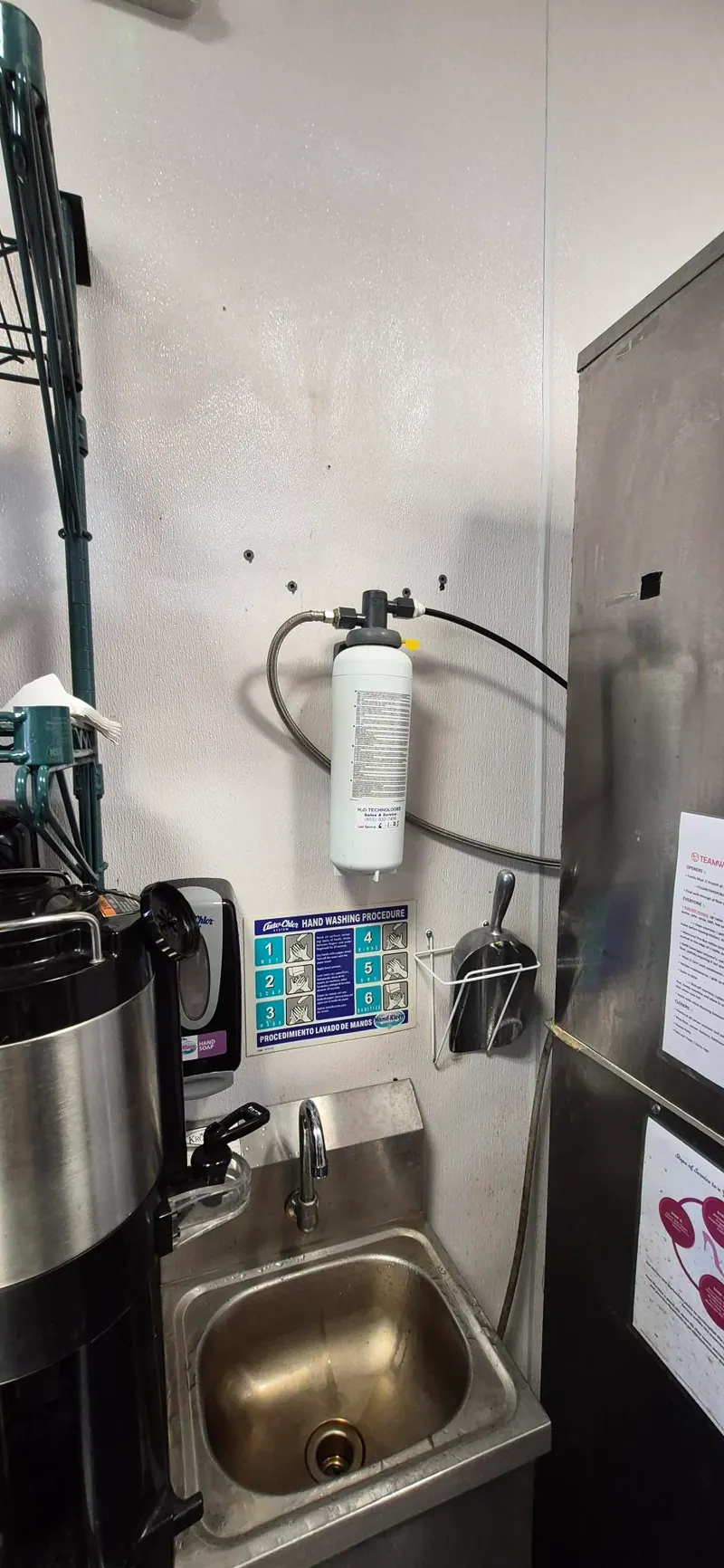 View larger photo
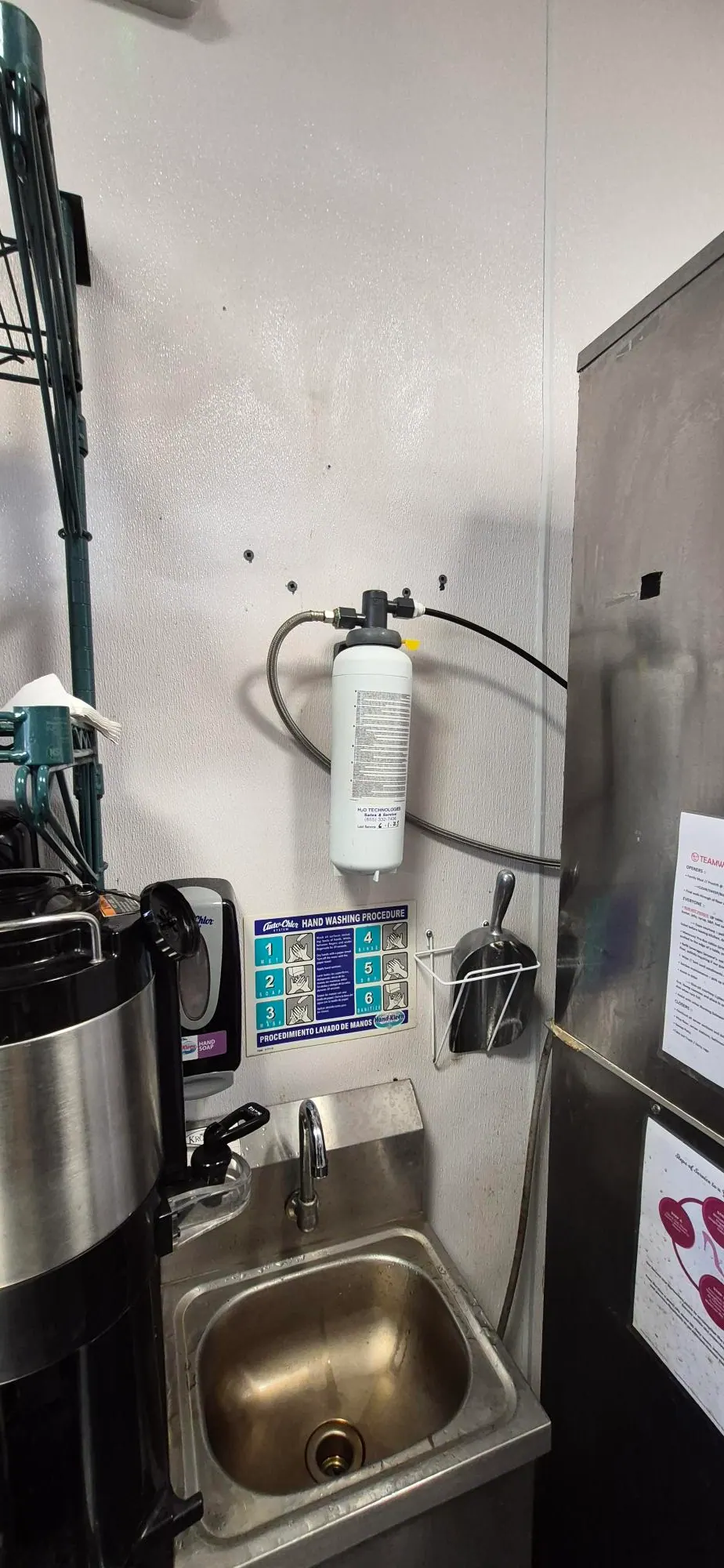
Water filter above a bar hand sink, Nashville, TN 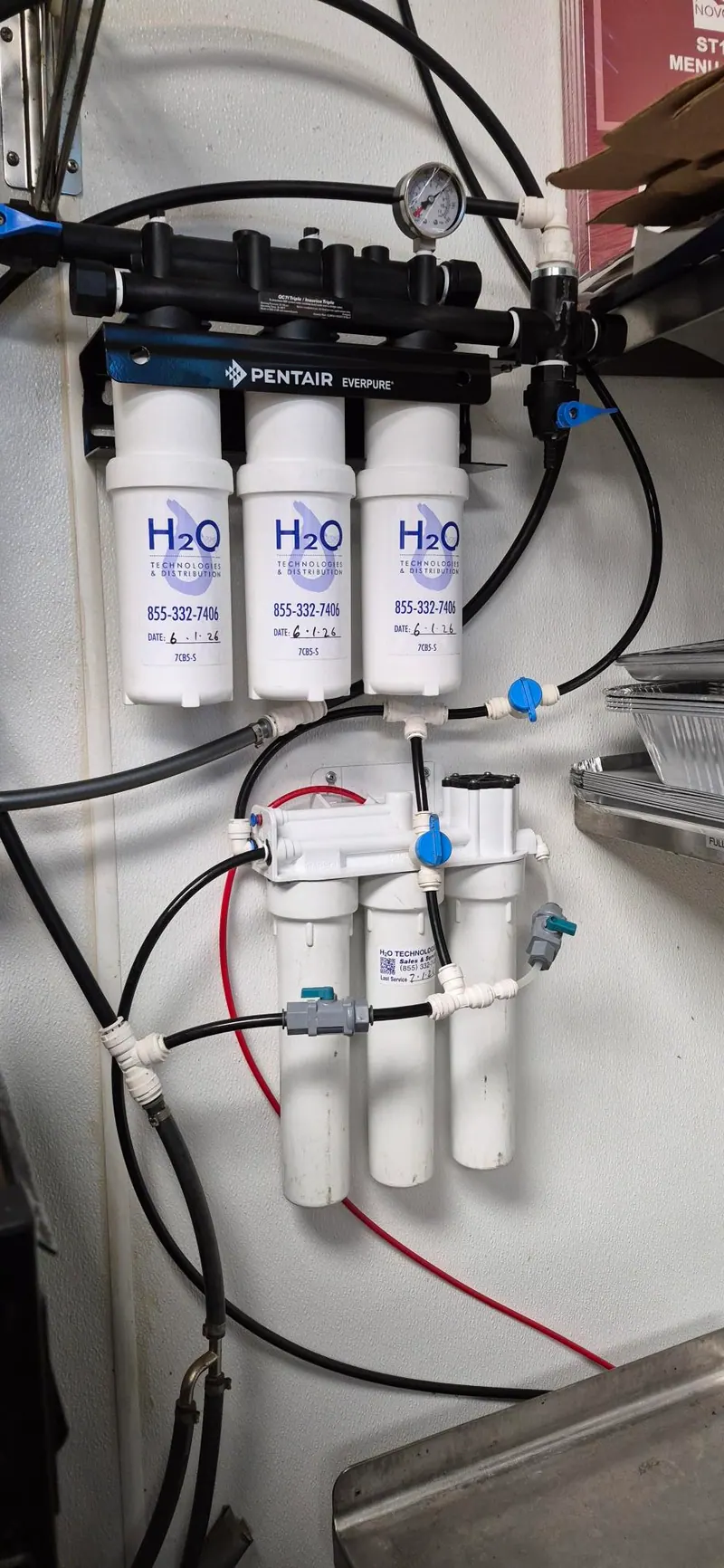 View larger photo
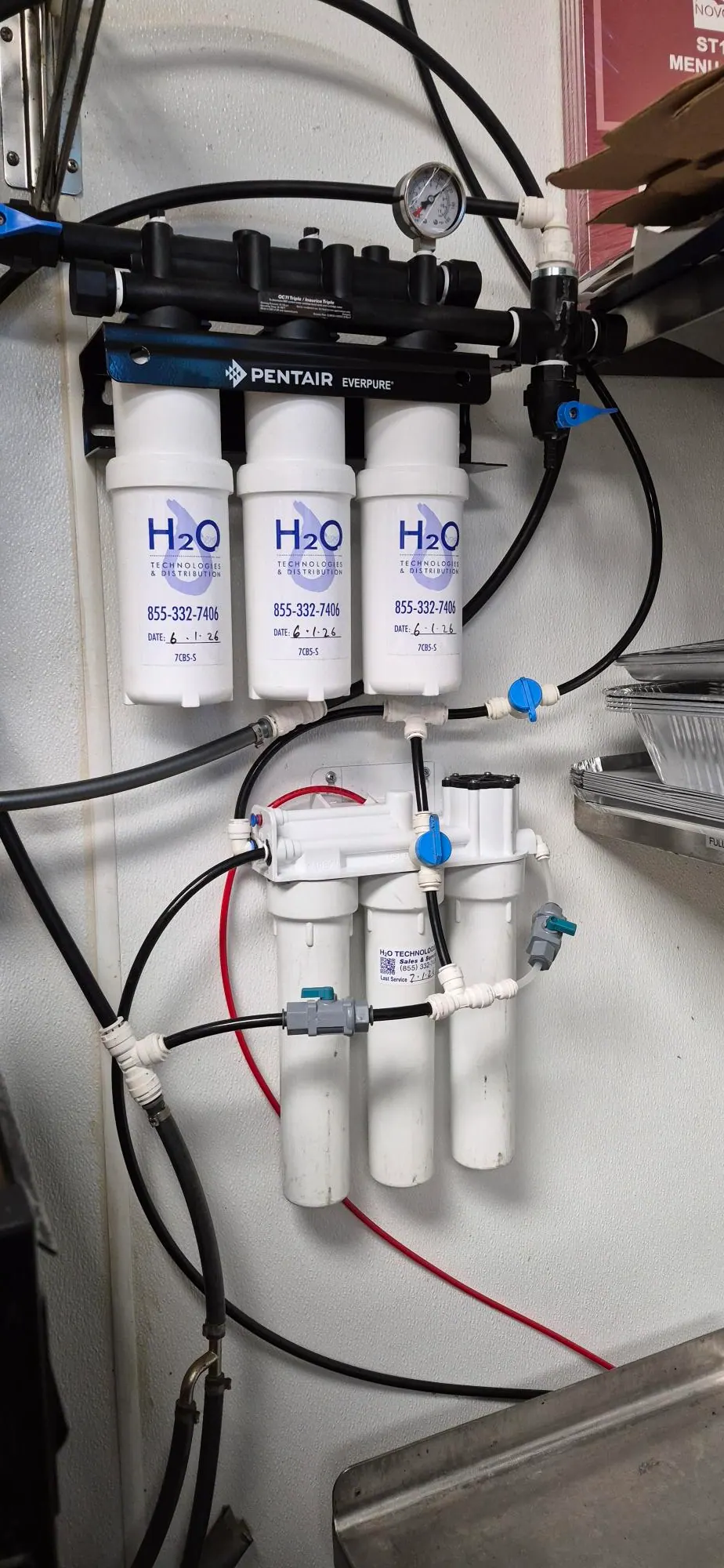
Triple filter system and RO unit, San Antonio, TX 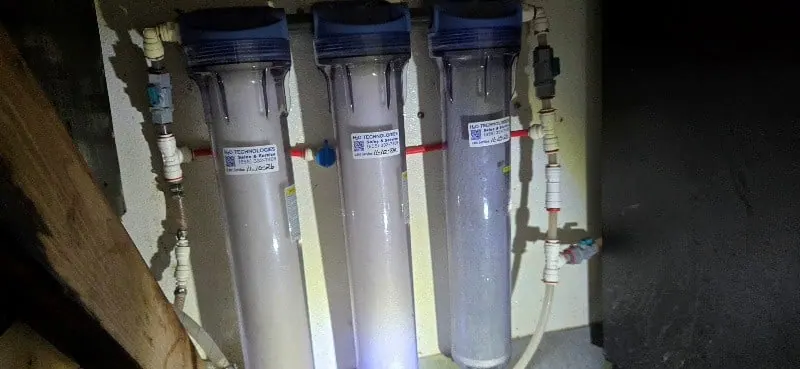 View larger photo
Three wall-mounted water filter housings with white cartridges and, Atmore, AL 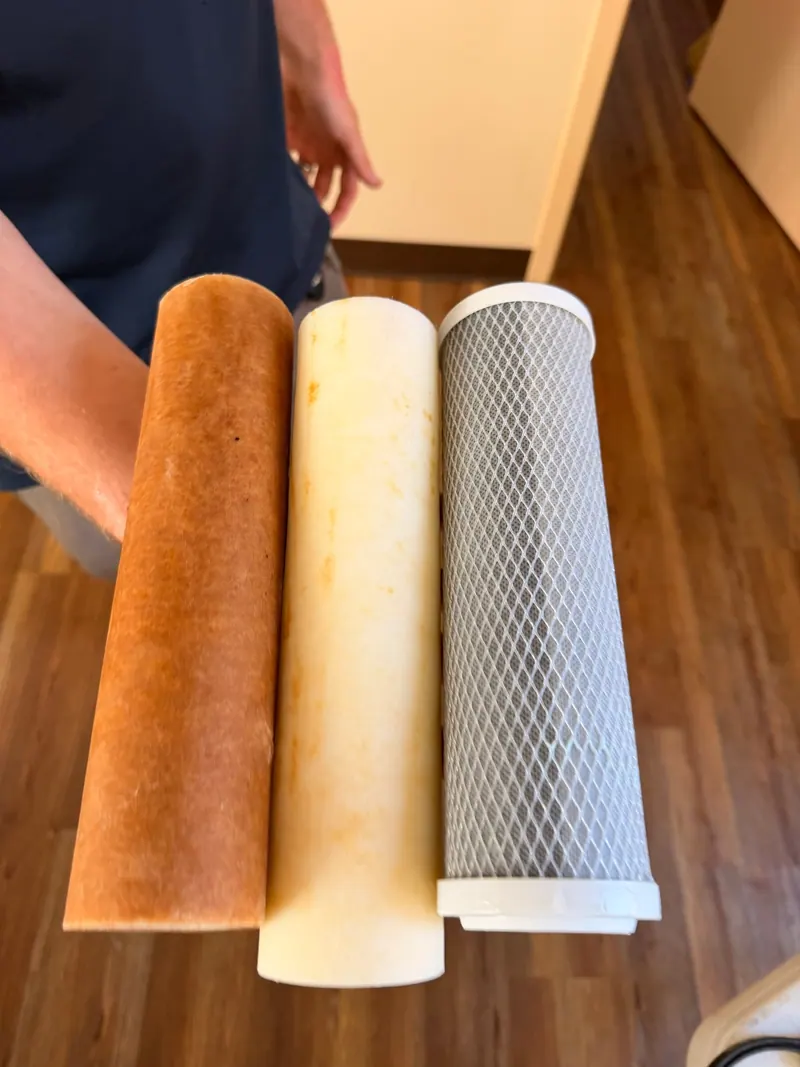 View larger photo
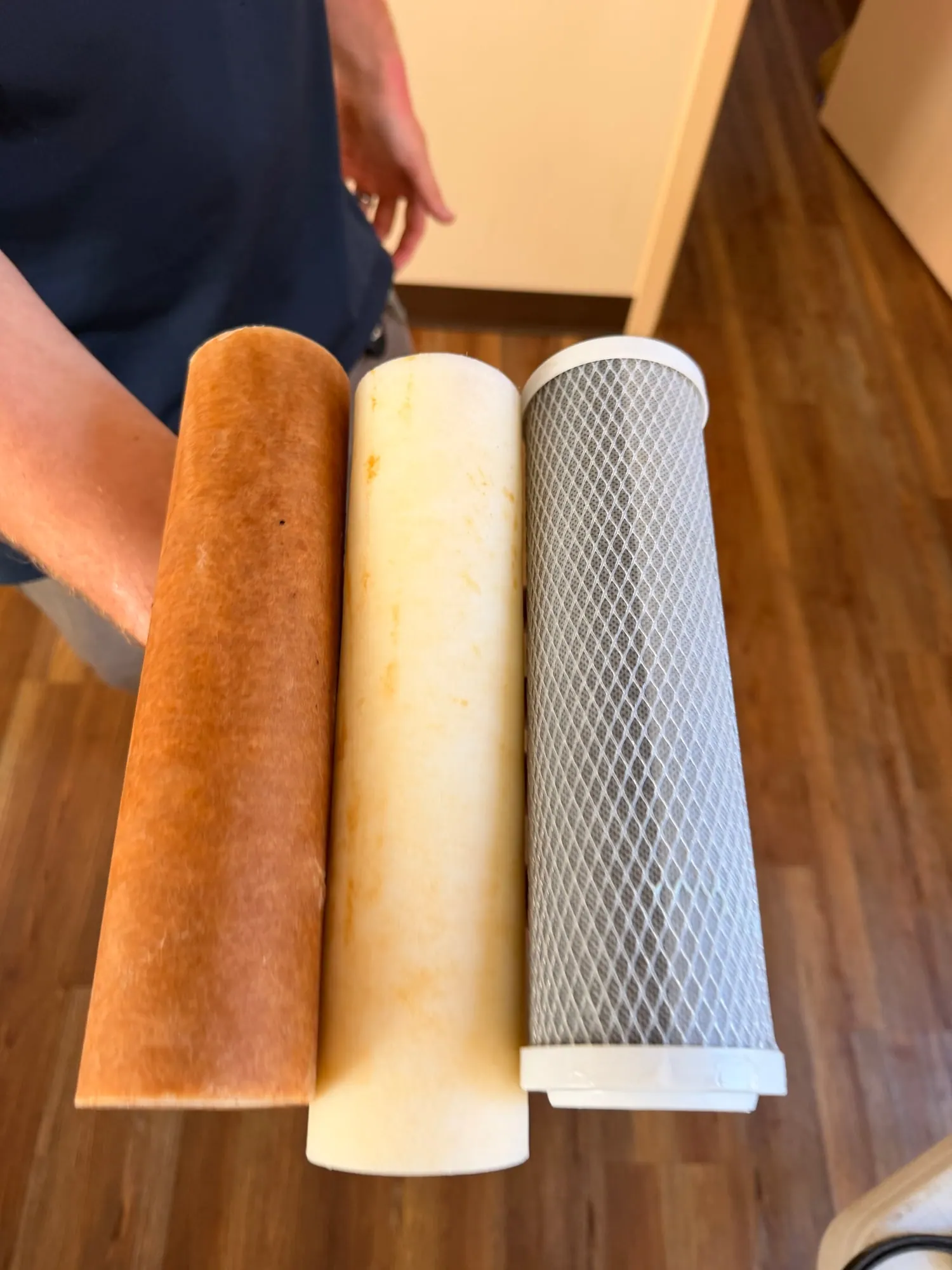
Used filter cartridges next to a clean replacement
Espresso water questions from cafe owners
Can I use the same filter for my espresso machine and ice machine?
Is reverse osmosis water too pure for espresso?
How often should espresso water filters be changed?
Can H2O Technologies recommend a system for our cafe?
Get a quote for cafe water filtration
Tell us your espresso machine model and your city. We will call you back with a filtration recommendation.
Call (850) 391-0460